Thursday, January 22, 2015

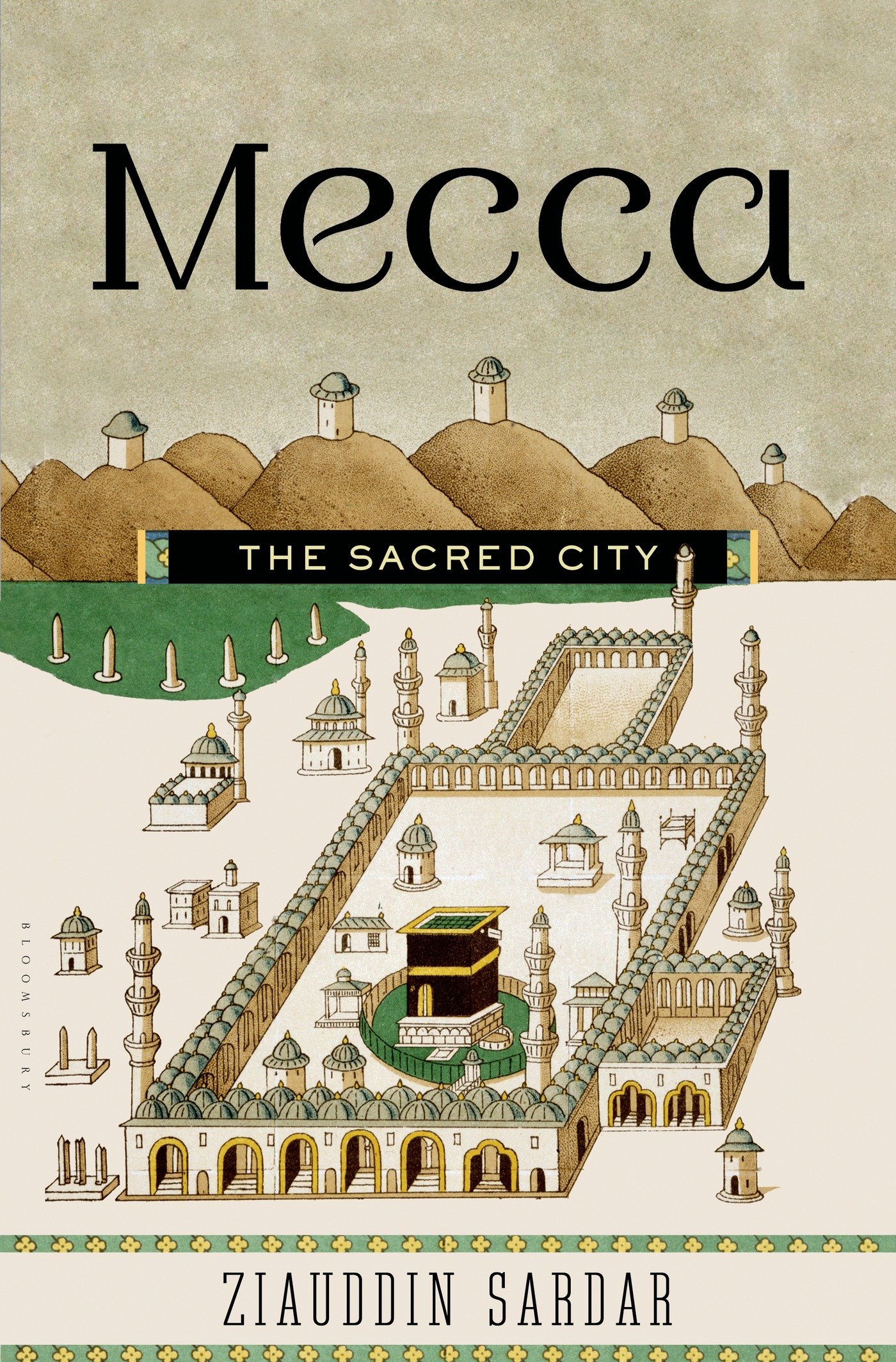
Book Review - Mecca, The Sacred City

Bloomsbury India, pgs 408, Price 599
Ziauddin Sardar’s book, Mecca, The Sacred City, is first a labour of true love of Macca and then a scholarly book, written by one, who wanted to mix history, religiosity, faith and devotion together and write a book, which leaves an enduring feeling of living in the times of The Prophet Muhammad, the years after his death and the historical importance of Mecca as a trade centre. The book however ends in a sour note on how Saudi Arabia is turning the holy city into “Saudi Las Vegas”.

“As far as the Saudis are concerned, Mecca has no history before Muhammad, or after Muhammad. Their denial of history is based upon a single reason. They do not want anyone to venerate Muhammad. The fear is that historical sites, rather than God, will become objects of worship. There is no place for history, art, cultural property, debate or dissent, the diversity and plurality of what Mecca ought to be. The Sacred City is a microcosm of the Muslim world. Mecca is making a categorical statement. The Muslim world is in a dire and perilous state.”

For a man, growing up as every Muslim around the world does, the first lessons learnt on his mother’s lap were to read the Qur’an, facing the direction of Mecca. It was his dream to visit Mecca for what every Muslim is taught to do, at least once in a lifetime, going on Hajj.  Imagine his luck, then, when in 1970, he was asked to join the Hajj Research Centre in Jeddah where he worked for five years and went on Hajj five times.

The Hajj as we are told began to be called so, when the first one was performed by The Prophet himself.

Sardar tells us: “The Prophet lead a procession of 90,000 people – men, women, husbands and wives, all dressed in what became the traditional garb of the pilgrims: two simple white unsewn sheets of cloth, one serving as loincloth, the other draped over the shoulder. The women dressed plainly in white. “

Then the people travelled from Madina, where the Prophet lived back to where he was born, Mecca where they reached at night. In the morning, we are told, “Mohammad went direct to the Sacred Mosque and made seven rounds of the Kaaba, after which he prayed at the Station of Abraham. Then he ran seven times between the hills of Safa and Marwah “ with his huge following. A day or so later, Muhammad rode to the valley on Mina and stayed there for a day and night and in the sunrise of the next morning he proceeded to the Mount of Mercy on camel back, from where he gave his sermon. On the tenth day, having thrown pebbles against the symbol of Satan. “After arriving at his tent, he sacrificed sixty-three camels, one for each year of his life, and distributed the meat amongst the poor. Finally, The prophet shaved his head and declared that the pilgrimage was complete.”

These ten days, began to be known as Hajj.

The first two chapters of the book give a fascinating history of Mecca and the reason why this book had to be written. Inspired by the 14th Century Travel writer and chronicler, Ibn Battuta, the author too himself followed in his step to make five Hajj to Mecca, the last being on foot and a jolly good camel with a mind of his own called Genghis.

The ancient city is today nothing of what it used to be and the author laments that being in the hands of Saudi Arabia, it stands to lose even the last reminiscence of the past.

Excerpt from the book:

“Modern Mecca is a city of contradictions. And the contradictions start with the name itself. Mecca, the name of the Holy City, is the original transliteration of the Arabic name. But in English, Mecca is used more widely as a generic term, meaning ultimate destination; a magnet that attracts people in large numbers; or an activity centre for people with a common interest—we refer to Los Angeles, for example, as the Mecca of show business, to Paris as the Mecca of chic fashion. Saudi officials have complained at such ‘derogatory’ usage. They see the name of the Holy City in such labels as ‘Mecca Bingo’, ‘Mecca Motors’, and worse, Mecca as the name for loosely clad American girls, as sacrilegious. So, in the 1980s, the Saudi government officially changed the spelling from ‘Mecca’ to ‘Makkah’, the old spelling, to emphasize the uniqueness of its holy and traditional character. Makkah, or more fully Makkah al-Mukarramah (Mecca the Blessed), is now used by Saudi government institutions as well as international organizations such as the United Nations, the US Department of State and the UK Foreign and Commonwealth Office.

‘Makkah’ may be blessed, but the more spiritually oriented Meccans, the descendants of the old and established families of the city, find nothing particularly ‘holy’ in the recycled designation of ‘Makkah’. What is evident to them is a city of proliferating bling, a haven of consumerism and opulent tourism that have usurped spirituality as the city’s raison d’ĂȘtre. They call it ‘Saudi Las Vegas’.

Be that as it may, don’t shut the book yet – from page 244 – 274 the delightful tales of visits to Mecca by the Indian Mughul emperor and Begums is not to be missed at all. A fascinating journey that! And for the fact that Mecca, The Sacred City is perhaps one of the most engaging books of history one can ever read.

Largely academic in nature, the author has packed in a lot of data which would delight a historian or a reader interested to know about Mecca, The Sacred City.

The Garamond typeset in which the book is printed, is soothing to the eyes and in keeping with many books which are slotted among Travelogues.


Ziauddin Sardar was born in Pakistan and grew up in Hackney. A writer, broadcaster and cultural critic, he is one of the world's foremost Muslim intellectuals and author of more than fifty books on Islam, science and contemporary culture, including the highly acclaimed Desperately Seeking Paradise. He has been listed by Prospect magazine as one of Britain's top 100 intellectuals. Currently he is the Director of Centre for Postnormal Policy and Futures Studies at East West University, Chicago, co-editor of the quarterly Critical Muslim, consulting editor of Futures, a monthly journal on policy, planning and futures studies, and Chair of the Muslim Institute in London.


Picture credits:

Author: Here

Book Cover: Here


Tuesday, December 30, 2014

Cry wolf for change!

Just after the first quarter of the year 2014, we in India did cry wolf for ample good reason. Apparently the environment would change, although we are still to see that change in our daily lives.
Crying wolf may have become a practice well entrenched in our minds, for we do cry wolf every time, things happen to us, which we don’t like, but then, having done with crying, we settle down to accept the things we can’t change now, and begin to plan on the next round of howlers that might make us cry wolf again.

Indeed, wolves are associated with fear because we have not forgotten our childhood tales like “Little Red Riding Hood” where the wicked wolf sat in grandma’s clothing to eat Red Riding Hood. And therefore we cried wolf early 2014 too.

What we may not know about wolves is - How Wolves Changed Rivers and lives and the environment.

Now watch this fascinating video!


Sunday, December 14, 2014

Book Review - Travelling Lighter by Suma Varughese

Suma Varughese’s second book, Travelling Lighter is more personal than her first book, which was a collection of her columns from 2001 - 2009, in Life Positive.

In this book, which again is a collection of her columns from 2006 – 2013, she recalls how she left her high profile job as Editor of one of India’s most popular life-style magazine, called Society, to take the jump into the unknown, as she took up the challenge of becoming the Bureau Chief of India’s first alternate magazine, Life Positive, in 1997. A hard decision in the face of what she was leaving behind her, Life Positive, among her own fraternity of journalists and publishers, was looked upon with doubt at that moment, and one did expect it to last not over a year. But there was a conspicuous growth of people who were hungry for a spiritual quest and waking up to a different dimension, who lapped up the magazine, making it one of the most successful magazine in that genre in India. The ‘inner journey’ had begun for Suma too. The ‘whimsical decision’ turned out to be a winner for Suma Varughese, who is now the Editor of the magazine.

Travelling Lighter is therefore a series of short, crisp accounts of Suma’s own journey with faith and the bold revelation of what day after day any Self-seeking individual is pushed towards – the act of living surrendered to a Higher Power.

The book is also an intimate revelation of a primal relationship she has had with her mother, the later Aleykutty Varughese, who passed away only a year ago in February. The living relation being the two ladies, one, the one who gave birth and the one who grew up to write this book, is a symbiotic one, which reveals that after years of being looked after by her mother, in her mother’s last years, Suma had the chance to return, to some extent the love and care she had received all these years from her. The book also deals with difficult emotions that one encounters on a spiritual path, emotions that weigh upon our path as seekers. When we leave the bondage of these emotions, we let go of the power they have upon us. Suma has had her share, with arthritis, asthma, IBS ( irritable bowel syndrome), which link themselves to emotions and in case of a spiritual seeker, become the base matter in the emotional body to release and let go, in order to overcome the physical byproduct of negative emotions. The stark honest accounts move you, because, the author, is a well-known journalist, with an enormous following. But as Devdutt Pattanaik, CBO, Fortune Group, says, “Suma’s columns are a seeker’s personal diary. The lofty becomes routine. The universal becomes particular. The infinite comes home. Jargon dissolves and a very lived wisdom emerges.”

The most poignant part of the book for me is the account of how, she along with her mother bought their home in Bombay. Suma had just left her secure job to take a jump into the unknown. But just then, with whatever she had collected and what she received from her mother, with a little help from her sister and a money lender, together the two ladies, daughter and mother bought the first home they would ever have in Bombay. It spoke of struggle and brought to mind the well researched fact that women can take risks in their lives and can initiate life changing decisions, when they have a roof over their head or a piece of land, they can call their own. This security surpasses none other in a woman’s life.

As the book progresses, it turns into a workbook with blank pages to note “Your Thoughts” which I found delightful.

I see the book therefore as one that can not only be read, but can become one with a practical use, thus taking it beyond its pages. Indeed, it is a book that can be used to be read out in a like-minded gathering and cogitated upon, to discover and journey into one’s on Self. And I wish it a Bon Voyage to that end.
Suma Varughese has informed us that through December 21, 2012, as fellow travelers on planet earth, we have transited the gateway to Divine Feminine consciousness that is now slated to influence the world. We can expect to have inherited better and balanced times.

Let us welcome and be the change!


About the author: Suma Varughese is the editor of Life Positive, India’s premier body-mind-spirit magazine. A veteran journalist with 34 years of experience, she was former editor of Society, a lifestyle magazine. A seeker in spirit, her first book Travelling Light received much acclaim from readers and resulted in Travelling Lighter. She lives in Mumbai, the only city in the country that she can bear to live in.

To read Travelling Lighter, Click Here


YouTube Handle
G+ Handle
Twitter Handle
Facebook Handle
Suma Varughese on Facebook Handle


Sunday, November 30, 2014

Delhi Queer Pride March 2014

On 10th November, 2014, Midnight Cigarette on Twitter said: “Because we don’t need the state’s consent to fuck each other senseless".
Indeed, on 30th November 2014, celebration, colour, laughter, happiness filled the air as we walked the narrow lanes, shaded and less populated on a Sunday afternoon, to make our presence felt and placed across our demand, our joy and happiness to be Queer.  As usual, the colourful clothing and laughter were lapped up greedily by TV Channels and much noise was created to take our Cause ahead.

Key to the issue of Queer Rights in India is Section 377 IPC which has been revoked by the Indian Legal System. This makes us vulnerable to all forms of abuse all over again. It is not a question of how the state machinery aid to repress us and our desires only; it is not even a question of whom we share our bodies with, and how and with whom we engage in the act of sex with; indeed, it is also how marital rape and abusive anal sex continues to thrive within heterosexual marriages, that the larger implications of not having the Law on our side is actually benefiting the abusers in a really big way, while depriving the queer community their right to contractual marriages/partnerships, which are within the Law and can be dealt with likewise. It is not about recognition only, it is about social status, partnerships and engagement and exchange of love and sex between mutually agreeable adults, with consent.

The Queer Pride March is a cry for recognition, rather than denial of a fact that has existed since ages in India. Supported by Human Rights Organization from across the world, the Indian scene continues to be less than BEST Practices world over. On an individual level across the developed countries in the world, while there may be issues around acceptance, still trickling down from hard cast sections of society, who resist change, in most countries this bonding is celebrated, protected and sanctify by Law. Law, MUST be on our side; recognition will follow.

And this is to be had Here and Now!


If sex and whom we are attracted to and want to share our bodies with is our individual right, which the state has no right to interfere in, then, Midnight Cigarette on Twitter is right!

Three cheers to #DelhiQueerPride! Live on!

Now gorge on the Photos! 
  

Saturday, November 22, 2014

My body; my territory

A few years ago, I watched a show in a small little theatre. The promotional message received promised a play by some very creative people. As it happened, the play ended with a man walking naked from the wings to the front of the stage. The audience watched in silence until the play ended. Then they left, each one lost in the privacy of their own thoughts.

Just a couple of days ago, on a business trip, I was at Sector 127 NOIDA, UP, India and at IHDP building close to HCL, when I chanced upon the image below in the entrance of the building.

Sculptor's impression of sodomy between a woman and a horse
Both reminded me of one thing, that being, our bodies are private for each one of us and whether we want to flaunt it or to hide it, is our personal decision to do so, but if we want to flaunt it to a rapt audience, we need to ask permission to do so. While on the one hand it is our right to do what we want with our bodies, but on the flip side, it is also a fact that the viewer may not want to see our bodies at all. That is a possibility. I was deeply offended that in the first case, the actor showed me his body, without asking me, whether I wanted to see his naked body at all. Actually I did not. I had seen a number of naked men – and women, whose bodies I wanted to see and touch, but that was with permission of the person. Here I was forced to see one, I had not asked for.

Women have been shouting that the privacy of their bodies must be respected, which also means, the privacy of their minds. We are at a point where the line of distinction of what is creative and personal, and what is creative and public is losing its boundaries. It is indeed, a bit jarring when, one goes for a professional meeting and finds at the entrance of the building, a sculpture of the nature of the above. Are we to understand that the creative force called sex is a figment of the artist’s mind, or are we to deduce that the sculptor was represented in the horse or the hapless woman - what are we to make of such creative art? And then, the question arises as to why, a corporate house must house this one, when there were other choices too, I am sure.

To a certain extent, what we project in our behavior as artists may be reflective the society we live in, but on the other hand, are these images not responsible too for the increase of atrocities of the ‘powerful’ over the lesser one? Are we, therefore, not in some way responsible too?

I have a breath picking up force at my throat to scream - my body; my territory and without my permission, I don’t want to see it displayed in public in any representation. And without my permission, I don’t want to see yours in whatever way you think I want to see it.


That said, let us see what others have to say about it.


Wednesday, November 12, 2014

Who will save those who can't #kissoflove?

#kissoflove


There are two things that keep a living being alive, and those are, love and tons of kisses. I remember how, whenever they could, my family loaded me with kisses, which I quickly shared with my dogs and cats in my childhood.

In recent years, I am keeping the practice alive with these two handsome dudes. (see below)

One really does not know, why people who kiss a lot, never mind other people kissing around them, but those who don’t allow their lips to resemble a ‘duck’s bottom’ and land their lips on another are really those, who are missing out on a huge benefit of being alive and kissing. Apparently, it is all about being and feeling unloved and hence they can't bear to see others #kissoflove. *sigh*

Of the two handsome dudes, visiting me every morning, one of them has even started to talk to me and ask for more. Indeed, he mumbles and rubs himself on my dress to say, I want more. Of course, before the world wakes up, both of us have shared many kisses. The sibling jealousy among the two brothers – and we know that in animal kingdom too, the competition is high for the same woman – is very strong and sometimes there is such a jostle for attention; I am almost on the ground.  Mind you, this is all in the morning and dogs are not lazy louts like humans who can’t rise, even if the sun is high on the sky.

Past our morning #kissoflove, we disperse, each to their own and rarely meet before the next morning.

In animal kingdom, to which we humans belong as homo- sapiens, only we are cuckoo to monitor kiss and label it even as belonging to religious groups. So it intrigues me a lot – what do they do, to show love, I mean those who are against #kissoflove? Are they not the miserable lot, who perhaps have never loved at all?  

In which case, we must now name another category of humans who resemble the homo-sapiens, but are after all, not so, because it seems their birth has happened without kissing at all!
To what order they belong, is one of the most profound questions science must quickly seek to answer. And if they were born without their parents showing #kissoflove, then, we must know if they are born out of #kissofdeath.

I pity them. Imagine going through life without knowing the happiness of falling in love with #kissoflove.


My two handsome dudes #kissoflove


Picture Credit Facebook: RSS claimed that the kissing squirrels are non-Hindus.

Sunday, October 26, 2014

Rishikesh - State of emptiness!

Come with a plan, when you visit Rishikesh and see it going in the direction you never planned it to go.

I arrived rather happy to get away from the Delhi pollution on Diwali day and found I was stranded in the middle of the road. The destination I was going to required me to take the autorickshaw, but there just weren't any at sight.

“You will have to walk the distance. It’s Diwali!”

Just as I was about to walk it alone, a man on a motorbike came along and I hitched up with him to reach my destination. 

Rishikesh is just one of those places you go when you want a ‘quick-fix spiritual high’ especially when you don’t have the time to bathe your spirit in a long adventure inside. Call it the ‘beach bum’s’ easy route to ‘An-Lighten-Mint-Tea’, Rishikesh offers a complete spiritual bath in 24 hours! You may come with a head full of actions you need to take in the next 3 hours, but by the time you wake up in the morning, the next day, you will have forgotten every bit of what you were to do and in its place you find, that you are in deep relaxation, as if there is no tomorrow and nothing to do!

Quell that panic rising inside, let go and flow with the tide.

Rishikesh lies on two sides of the Ganga and both sides give you a gorgeous spread of sound, lights, market-place buzz and ample large doses of the spiritual. Two bridges, Laxman Jhula and Ram Jhula connect the two sides of the bank of the Ganga and the constant flow of people, carts, animals, humans, scooters and motor bikes make it a busy passage, almost akin to the Howrah Bridge in Kolkata! On the other side of the bank, away from the main road lie ashrams for travelers who want to stay there and visitors too.

Come October, the place begins to crowd with what I have coined to call the ‘spiritual junkies’, meaning to describe people who will lap up anything – books, ideas, yoga, nature cure, indeed anything alternative, including dope which is abundant in the locality, with the dhatura plant growing wild around.

Yet, Rishikesh is the land of the ancient sages. It carries in its heart years of meditation and silence. It is one place where every sage has had their stay and many have meditated there. It is a destination which is not only known for the ‘other-worldly’ pursuits, but also for this worldly desire. Adventure Sports; mix with yoga and naturopathy, the ordinary coexist with the extraordinary to make it the most quintessential spot closest to Delhi, India.

For the one who rejoices in body, there is an abundance of ways to pamper it; for someone, who believes that the body is but a boat that carries the soul from one side to another, you have the ferry service at Ram Jhula, which takes you directly to Parmatma Niketan, or the abode of God.

But the best of all however, is to cross the bridge from a state of desire to a state of emptiness.


More on Rishikesh click HERE

To book into International Yoga Week starting March 1st to 7th, 2015, bookings starting November 1st 2014, Click HERE

Wednesday, October 22, 2014

Book Review - The Guest by Suneetha Balakrishnan


Such a pretty story is the first thing I said to myself as soon as I put my Kindle down, having finished Suneetha Balakrishnan’s story The Guest on Amazon Kindle Direct Publishing.

Set in an unknown destination, the story is about three people, Saraswathi, who is the widowed mother of the single child, Sameer, who is married to Kavitha and their story together.

Saraswathi is happy to have Kavitha enter her family as her son’s wife, as she feels Kavitha has a deeper connection in her personal life, which is over and above what she has with her son. Sameer on the other hand is a loving and caring man, but like many single children is lost in his own world. Kavitha adjusts and even enjoys her little family, even as she is a working woman with all the stresses of being one. 

The story takes the reader to the family and its day to day happenings, until, one day, just one single day, everything seems to go wary. An otherwise smooth running family is caught in misunderstandings created by an act, which then races the reader through quite a nail-biting journey, when really the reader joins the family, running helter-skelter to resolve the problem. But finally, when the reader does come to the end of the story, h/she is delighted with what there is to discover. And that becomes the reason for the entire book to have been written – The Guest. Who is this guest? Wherefrom has he come from? The delightful and happy ending tells it all bringing joy to the reader and smiles that sit comfortably on the lips, for a long time, thereafter.

Suneetha Balakrishnan, is a Journalist, author, and writes stories and poems in Malyalam and English. Her writings mix the traditional with the modern. Her characters reflect the same personality; they are at heart traditional and yet use a modern life with its paraphernalia of electronic gadgets and all. 

The characters in this book are well cut out, but the only thing I really missed was some juicy romance between the two protagonists, Sameer and Kavitha. Indeed, I am sure this will follow after The Guest has arrived!

Would you care to find out too?

Find out Here

Tuesday, October 14, 2014

Cross Over and Embrace!

The Transgenders in India have been recognized in India, for the first time in the Aadhar Card. Recently their request to be included in Voter ID as transgenders/third gender, has been rejected by the Election Commission in Mumbai. Please see link below.

While the debate on gender continues and really, in all honesty, I oppose ‘labels’ purely because, it is too restrictive, I do hope for more for the transgenders in India.
Recently, I came across a community quite close to my home. They had just been visiting someone’s house in the locality and I was on my way out to work, so only a few words passed between us.

“So, where do you live?” I asked one of them.

“Kalyanpuri.” She answered. I knew my house help too lived there.

“I have a question to ask you,” I continued gingerly. “What do you call yourself?”

“Kinnar… we call ourselves Kinnar.”  She said smilingly, knowing how interested I was in her.

“May I visit you, one day?” I asked.

“Please come!” she said and called out to her friend to give me her visiting card. “The number beneath Sai Baba is mine. The lady on the other side is my Guru.”

“Thank you!” I said politely, my interest shooting up in leaps and bounds. “I will come.”

They were all so beautiful, wearing gorgeous saris and trinkets on their neck, fingers and toes.

There really is something amazing about people you cannot define. They become mysterious to our eyes. And this becomes the source of desire.

Ever since, I met a few transgenders in a close encounter a few years ago, in Bhopal, I have felt a deep seated attraction to them. Of late, working on my third novel, I have places where I needed to research on them, at a very close heart to heart, at home spaces and I was already wondering how I could do that. There is so much literature on them, yet, being with a community, spending time and sharing meals with them, makes a huge contribution to your thoughts.

While issues of visibility plague LGBT movement in India and Laws are still primitive and not supportive, it is hard to keep ones head above the water and fight for recognition, income, and Legal status.  They earn only by ‘blessing’ new born children and are rarely employed with the Government.

I, of course promised to let my Kinnar friends know of every birth in the locality and every marriage! They would calculate the rest. Not too difficult in Delhi, where B follows M, within a year!

On the one hand, transgenders have always been vocal about themselves but we have taken too much time to recognize their presence among us. By giving them no legal status, we force them to marginalized quarters in our cities and towns, where, they are shaded out from the rest of society. 

Their economic status does not improve, because, our society and legal system does not permit them the right to education nor earning a livelihood, just like others. And in this respect, they are far more in hiding, than they would like to be.

Indeed, to include them in our society, we need to embrace them in our lives. We need to open up and challenge ourselves to cross over.


To know more on the Kinnar Community, click Here

EC rejects transgenders demand Here


Thursday, October 09, 2014

House of Dolls

4 sets surge navy blue pleated skirts
6 sets full length white cotton shirts
6 sets white cotton knickers
6 sets blue cotton knickers
6 pairs of white socks
6 pairs of blue socks
2 blue full length cardigan
2 blue pull-over
2 sets of ties
1 blue blazer

...and the list went on and on. Suggested stores: Mohini Stores, Police Bazar, Shillong.

The tall list of clothing for school were packed in a trunk and I was taken one Sunday afternoon to Pine Mount School, Shillong and left there to become a boarder among people I had never met or seen in my life.

I remember being totally frazzled mentally trying to make sense of the situation. My throat hurt trying to hold back the tears until, I was taken to the restroom, where I locked myself up to cry. I could hear someone bathing in the cell adjacent to the toilet but when there was a voice that said, 

“Who is there?” I almost choked with fear of being found out.

The girl left the bath cell and raised an alarm upon which, there was much thumping on the door.

“Open the door, I say, open the door.”

I reluctantly did so and there in front of me was a burly woman, whom I got to know later. She was our Matron and of course, I did not like her at all.

Where was my mashi I wondered? Why was I left among strangers? I wanted to run away that minute. But soon the evening began to lose its brightness and I was led by the seniors to the Assembly Hall, where I remember distinctly, being carried by a ‘big’ girl and swirled around in a dance to someone playing on the piano.

They did their best to make me laugh, but something had already died inside me. I would be forever shy of people I did not know and I would always fear that I might be abandoned. I would also fear loss of loved ones, most of all, Laika and my home full of dolls. It is not as if I was not told before that I was going to boarding school. I knew about it because there was so much discussion about in our house that I whispered to Laika – “I think I will be going away Laika. They are packing my bags, just like I helped Mamoni pack hers, remember?”

Laika knew when I was going. He had refused to eat that day. The English Headmistress at School, Ms Thompson had warned my local guardian, my family that no matter what they must not visit for a while and even if they were in tears and in panic, visiting me was not allowed till a month went by.
However, when they did visit, I was already distanced to them. I believe the first taste of being distanced from even myself, had already started then. I longed to see my family now, for what they brought along with them for me and I rejoiced when they left, on what they left with me.

Patsy, my first doll from overseas was one!

Dear Chotomoni,

Thank you for sending me Patsy from London. She is very pretty and everyone in schools loves her. We are all so happy when she closes her eyes when she goes to sleep and opens them when she wakes up.

She drinks her milk from her bottle but she has a bath only twice a week, on those days I have a bath too. After her bath I put on her lacy socks and white shoes and her pink, painted with flowers dress. I also place on her neck the blue necklace.

She too will be going to school, but since mother and daughter can’t study in the same school, she will go to Loreto Convent while I remain in Pine Mount School.

I don’t cry in the night anymore because, Patsy sleeps with me all night.

Yours,

Julu.

That was one of the first letters I wrote aided of course by our Class Teacher. Bless her!


Stories from childhood by Julia Dutta, in anticipation of “Terry and His Little Brothers”


You might also like to read: Until death do us part by Julia Dutta


Thursday, October 02, 2014

Mago Jaio Na!

Picture Credit: Panchali Sengupta, Kolkata, India


Ma go Jaio Na – Don’t leave us and go away, Mother!

She visits us only once every year. It is looked forward to by Indians all over the world and for Bengal and Bangla people in India and the world, it is one festival that brings all and everybody together in celebrations. 

In Shillong too, for days before the pujas, there is an air of celebration in the air. When I was a child, I got over four new dresses for every day of the celebration. The dog in the house got a warm water bath and scrub and a new collar. Our dogs were registered with the Shillong Municipality Office and had a number given to them, in case they got lost or ‘stolen’.
For all four days of the celebration, our kitchen was closed and we all ate at the pujo mandol (tent) and our dog ate at house, his normal, meat soup and rice. Only Zarak was vegetarian – he ate only rice and dhal! Imagine, for the size of a lion, Zarak refused meat! Unbelievable!

The pujas happened in the Jail Road Boys High School and many other places. Our family, visited everywhere but participated at the Jail Road puja because it was closest to our house.

Every year, when the pujas were over, Shunu carried the gigantic idol of Durga ma, and her children, Ganesa, Lakshmi, Saraswati and Kartika, along with the asura and lion on his shoulders along with three other men on her journey to the river, where she would be immersed, to symbolise to her return to her ‘husband’s house, Sivaloka!

The earth visiting deity came once from her husband’s house to destroy the evil in the earth. The earth is her mother’s home! Symbolic of creation, the earth, is Ma Durga’s . 

That year, when Laika and I sat near the washing area, behind the kitchen to watch Shunu take Ma Durga on his shoulders, to the river, was the year, that finally put a stamp on my fate, as my Mashis, my mother’s younger sisters were going out of Shillong. I was to be sent to boarding school. My crime?

Laika and I were engaged in a kissing act, which had been banned! Needless to say, we were caught in the act by Shunu, as he was passing by with the goddess on his shoulder. Since our house was clearly visible from the road, Shunu had seen me and Laika ‘in the act’!


Actually, this cute participation between us was only an excuse. My family was worried that I may get an infection, but the fact is: where there is love, there is no fear of infection.

My mother had left for her first employment, my mashi was to be married and would leave for Bombay, my youngest aunt had got admitted to a College attached to the University of London and she would be leaving soon. Naturally, I was to be sent away to the boarding school in Shillong.

Like Shunu, who chanted, continuously as he carried the idol on his shoulders, I too had pleaded in tears, when I saw my mother, leave for her job:

“Ma go, jaio na! – Mother, don’t leave me and go!”


Memories from childhood, by Julia Dutta, in anticipation of Terry and His Little Brothers.

Picture credit: Panchali Sengupta in Kolkata, India