Showing posts with label India. Show all posts

Wednesday, August 14, 2019

Excuse me, please - I am a new India


Let us not begin the day, 15th August 2019, with feelings of patriotism without understanding, what has changed in our country from the time, Pandit Nehru made his ‘tryst with destiny’ speech, which the country heard on the radio if they were unable to come to Delhi. Years of subjugation lead people to breathe easy, because, as Indians, they were returned from the British Empire, what was theirs, to call and to nurture as their own. The change was desperately needed.

No matter, how you look at it, the change was slow – very slow indeed.

It has taken us a long time to disrupt the system, to reach the last man at the furthermost corner of India. It has taken India, to take a roundabout turn and harness its strengths to do what it needed to do.

Ullekh N.P in his book, War Room, describes how the Elections of 2014 was won on digital media, using technology, to its best. The rise of India, as a technology-rich country, did not start in 2014. 

Way back, Bill Gates visited India, and went to Tamil Nadu, to experience the state, because, most of the Indians working in Microsoft, were Indians from Tamil Nadu. He wanted to know where the ‘brains of India’ came from.

The real freedom we need to be proud of is our enormous strength is the technology which we are now garnering not only to win elections but also in all fields that affect our lives. This is creating a new generation of young change-makers who want to do more for their country, in order that hunger, can be eradicated, education can be for all, housing can also be for all. Plus, healthcare is given to all. All, these are basic human rights of an individual. And this was not possible to achieve even after 65 years of Independence!

So, the real patriotism is coming from where it should – young change-makers in every field.    They are leading the disruption in every field and we need to recognize that and move with times, happy to move with the clock, moving forward.

It is not enough to shout Jai Hind one day and relapse into ‘pan-chewing, bidi-smoking, spitting-publicly, defecating-publicly, and using walls to urinate publicly, people. We need leaders who inspire the youth and this is why the youth are happy with the way they can do things today, which they never could, earlier on. Ease of doing business is primary to our country, so we have more FDI in our country. And the backbone of our country remains strong – Economics.

This Independence Day is more precious because the day coincides with Raksha Bandhan (The festival which strengthens ties between brothers and sisters). If yoga is accepted and practiced worldwide, I think that Raksha Bandhan too should become an international festival. 

In the purity of the bonding between brothers and sisters, is an unconditional tie of love, that runs through life – it is by its very nature an emotion spelling out devotion to each other, and protection of each other. In that sense, it is free, because unconditional love and loyalty set us free.

Jai Hind!


Monday, July 09, 2018

#WakeUp or #PackUp #MadWithBhan #MADTakeWays


   Book Review - Make A Difference With  (a little assistance from) Bhan.

“Somewhere between 6 and 9 in every 10 Start-Ups fail.

No one is exactly sure how many.

And very few of us know exactly why?

Seventy-five percent startups fail, stated Harward Business School in 2012.

Eighty per cent start ups fail, Forbes told us in 2013.

As many as 90% of start ups in India fail within the first 5 years, according to 2017 survey conducted by IBM Institute of Business Value in collaboration with Oxford Economics.

By year 10, only one-third startups survive, as per US Bureau of Labor Statistics.”

All this is not my voice; it is not even #RavinderBhans voice. According to him, Owner, Founder, and CEO of #TPS ManagementConsultants, with 35 years of marketing consultancy experience behind him, in all he says is “Focus on succeeding.”

Precisely why I picked his book, Make A Difference With  (a little assistance from) Bhan.

After the initial few epages of forward, acknowledgments from India, UAE and USA giant multi-nationals, the author brings us straight to the subject – Do I have the money to StartUp? Do I have a product to sell? Followed by how to…detailed step-by-step way to do which engrosses the reader totally. Let’s admit it, you won’t pick up this book, unless you want to StartUp yourself. So, naturally, your mind is ticking away as Bhan hand-holds you through the pages, from start to take you to next level.

At the end of each Chapter you have the #MAD Takeaways and let me tell you, I have been to many conferences of StartUps, but have never come to such a precise summarization of thoughts placed across all the Chapters.

Every Chapter starts with a story, you can identify with if you are a startup or are planning to become one.

In 1992, the author tells us, he had been employed for one-single-day! It was the turning point in his life. He had a family to maintain and kids in school. At rock-bottom, as many of us in business or in life know, the springboard of transformation happens. One might have nothing except a burning will to rise like a phoenix and fly. That is exactly what happened to Bhan – straight from the horse’s mouth, straight talk, then. When you have been there, done that, there is nothing to look back to, only the journey ahead!

A highly motivating book, this!

In India, where the population is high, and education too is available to all, at least in the urban areas, jobs are hard to come by. The industry does not require the kind of manpower out there in the market. Automation is quickly taking over, so there is bound to be a huge shakeout of manpower or no human hands required for jobs except retail, and online activity. There is no option, but to StartUp, if one wants to survive. #RavinderBhans book comes to aid.

You might like to be inspired by him on the following online forums.

#RavinderBhan is on Facebook – Click HERE and Like his page And on Twitter Click HERE

On LinkedIn, where he has a huge following – Click HERE and follow/connect.

And on YouTube – Click HERE to get inspired.

You can also reach him at TPS Management Consultants


Tuesday, November 22, 2016

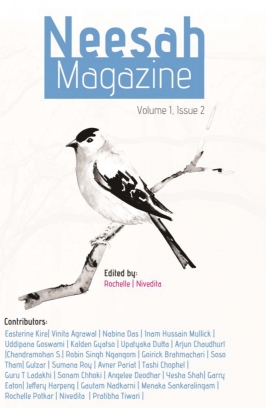
Neesah Magazine, A Good Read of Prose & Poetry

Photo credit HERE
In my memory, northeast India is never far from violence, insurgence, Tantric cults and practices. At the same time, it is nature’s paradise of beauty, music and dance, poetry and writings, films and paintings. Imagine then, when I saw the lady sitting beside me in the aircraft, putting away the Neesah Magazine, having consumed the last page, I begged to have a look at it.

“You can have it,’ she said generously, which I accepted without allowing her to think again.

The magazine was a mix of stories, poetry and book review. I found the stories flavoured with violence, a disturbing trend in northeast India. Love Potion by Easterine Kire, Sin and Retribution by Uddipana Goswami, Dying to be heard by Vinita Agrawal, Prem and the black rose by Kalden Gyatso, all, flirted with some form of violence in love and life. But then, why did I continue to read these stories? Just because, the style of writing was simple. The authors told the story well. Also, having come from the northeast, I visited my childhood and memories left far, far behind in years.

The poetry was excellent though, and I even learnt about Japanese Poetry, the Haiku, Tanka, Haibun and Senryu styles/forms. That was the real take away.

Last but not the least, the book review of The Lost River:On the Trail of Saraswati, by Michel Danino was superb! And I would spend the last rupee I had to have that book, after reading that powerful, thought provoking review.

Those interested in reading literature from the northeast, must surely own the magazine.
Write me an email and I will help you get the life and times in the northeast part of India, so clearly seen through the eyes of the writers.


Thursday, August 13, 2015

Book Review Anusual


What goes around comes around.

Starting from Social work in Delhi, Anu Aggarwal’s journey to tinsel town in Mumbai in the late 1980 saw her rise to stardom and super model quite by chance.

In 1990, she became a rave across India and the world - Aashiqui, 1990, with Mahesh Bhatt as Director, turned her into the heart’s desire, both for men, and women. Her nubile body, damsel-in-distress looks pulled the heart strings in every heart and sooner than later, Anu Aggarwal became the actress made to travel across the globe with her stardom. And suddenly from the name on everyone’s lips, she was lost in oblivion. From who’s that girl, she became, where’s that girl? And then people stopped to ask about her any more.

But the famous in the world, don’t make a quiet retreat. Suddenly, out of the blue, she came back from the dead. Indeed, the word dead here, is for real. In a near fatal accident, Anu Aggarwal almost lost her life, breathing in coma for nearly a month! She had multiple fractures when she came to and after many months of healing and repair, she is back again, this time with a Book.

Anusual – Memoir of a Girl Who Came Back from the Dead recounts her life from Delhi as a Social Worker to becoming a glamour super model in Mumbai to becoming a super star in Bollywood, followed by Hollywood and French films too. But it is not only the story of a celebrity film star of the ‘90s, but what does take the reader by surprise is Anu Aggarwal’s engagement with the spiritual. Giving up a life of fame, fags, faqs and fans, she dissolved into a life of absolute abstinence, strict discipline by taking up Yoga at a more than rigorous Ashram in the Himalayas. She spent many years there and then returned to Mumbai, only to be wrecked by an accident that nearly took her life. She emerged from there and went back to where she began – a life working with the less fortunate in the slums of Mumbai, teaching Yoga to a vast many.

What goes around comes around.

The book is written in a matter-of-fact manner with an ample dose of what she was most desired for by both men and women alike, her sensuality and lost looks of a little child, the innocence in her eyes, that drove men and women to fantacise about her; indeed, there is an overdose of sex with men in her book. It carefully conceals what many believe she was a lover of women too.

I have had my doubt too and I wondered if her over engagement with the male gender is her own way to prove to herself that she is not attracted to same sex.

But this, only the reader will know once they read what is concealed within the pages. 


Anusual—Memoir Of A Girl Who Came Back From The Dead: HarperCollins India, 192 pages, Rs 299


Sunday, November 30, 2014

Delhi Queer Pride March 2014

On 10th November, 2014, Midnight Cigarette on Twitter said: “Because we don’t need the state’s consent to fuck each other senseless".
Indeed, on 30th November 2014, celebration, colour, laughter, happiness filled the air as we walked the narrow lanes, shaded and less populated on a Sunday afternoon, to make our presence felt and placed across our demand, our joy and happiness to be Queer.  As usual, the colourful clothing and laughter were lapped up greedily by TV Channels and much noise was created to take our Cause ahead.

Key to the issue of Queer Rights in India is Section 377 IPC which has been revoked by the Indian Legal System. This makes us vulnerable to all forms of abuse all over again. It is not a question of how the state machinery aid to repress us and our desires only; it is not even a question of whom we share our bodies with, and how and with whom we engage in the act of sex with; indeed, it is also how marital rape and abusive anal sex continues to thrive within heterosexual marriages, that the larger implications of not having the Law on our side is actually benefiting the abusers in a really big way, while depriving the queer community their right to contractual marriages/partnerships, which are within the Law and can be dealt with likewise. It is not about recognition only, it is about social status, partnerships and engagement and exchange of love and sex between mutually agreeable adults, with consent.

The Queer Pride March is a cry for recognition, rather than denial of a fact that has existed since ages in India. Supported by Human Rights Organization from across the world, the Indian scene continues to be less than BEST Practices world over. On an individual level across the developed countries in the world, while there may be issues around acceptance, still trickling down from hard cast sections of society, who resist change, in most countries this bonding is celebrated, protected and sanctify by Law. Law, MUST be on our side; recognition will follow.

And this is to be had Here and Now!


If sex and whom we are attracted to and want to share our bodies with is our individual right, which the state has no right to interfere in, then, Midnight Cigarette on Twitter is right!

Three cheers to #DelhiQueerPride! Live on!

Now gorge on the Photos! 
  

Saturday, November 22, 2014

My body; my territory

A few years ago, I watched a show in a small little theatre. The promotional message received promised a play by some very creative people. As it happened, the play ended with a man walking naked from the wings to the front of the stage. The audience watched in silence until the play ended. Then they left, each one lost in the privacy of their own thoughts.

Just a couple of days ago, on a business trip, I was at Sector 127 NOIDA, UP, India and at IHDP building close to HCL, when I chanced upon the image below in the entrance of the building.

Sculptor's impression of sodomy between a woman and a horse
Both reminded me of one thing, that being, our bodies are private for each one of us and whether we want to flaunt it or to hide it, is our personal decision to do so, but if we want to flaunt it to a rapt audience, we need to ask permission to do so. While on the one hand it is our right to do what we want with our bodies, but on the flip side, it is also a fact that the viewer may not want to see our bodies at all. That is a possibility. I was deeply offended that in the first case, the actor showed me his body, without asking me, whether I wanted to see his naked body at all. Actually I did not. I had seen a number of naked men – and women, whose bodies I wanted to see and touch, but that was with permission of the person. Here I was forced to see one, I had not asked for.

Women have been shouting that the privacy of their bodies must be respected, which also means, the privacy of their minds. We are at a point where the line of distinction of what is creative and personal, and what is creative and public is losing its boundaries. It is indeed, a bit jarring when, one goes for a professional meeting and finds at the entrance of the building, a sculpture of the nature of the above. Are we to understand that the creative force called sex is a figment of the artist’s mind, or are we to deduce that the sculptor was represented in the horse or the hapless woman - what are we to make of such creative art? And then, the question arises as to why, a corporate house must house this one, when there were other choices too, I am sure.

To a certain extent, what we project in our behavior as artists may be reflective the society we live in, but on the other hand, are these images not responsible too for the increase of atrocities of the ‘powerful’ over the lesser one? Are we, therefore, not in some way responsible too?

I have a breath picking up force at my throat to scream - my body; my territory and without my permission, I don’t want to see it displayed in public in any representation. And without my permission, I don’t want to see yours in whatever way you think I want to see it.


That said, let us see what others have to say about it.


Wednesday, November 12, 2014

Who will save those who can't #kissoflove?

#kissoflove


There are two things that keep a living being alive, and those are, love and tons of kisses. I remember how, whenever they could, my family loaded me with kisses, which I quickly shared with my dogs and cats in my childhood.

In recent years, I am keeping the practice alive with these two handsome dudes. (see below)

One really does not know, why people who kiss a lot, never mind other people kissing around them, but those who don’t allow their lips to resemble a ‘duck’s bottom’ and land their lips on another are really those, who are missing out on a huge benefit of being alive and kissing. Apparently, it is all about being and feeling unloved and hence they can't bear to see others #kissoflove. *sigh*

Of the two handsome dudes, visiting me every morning, one of them has even started to talk to me and ask for more. Indeed, he mumbles and rubs himself on my dress to say, I want more. Of course, before the world wakes up, both of us have shared many kisses. The sibling jealousy among the two brothers – and we know that in animal kingdom too, the competition is high for the same woman – is very strong and sometimes there is such a jostle for attention; I am almost on the ground.  Mind you, this is all in the morning and dogs are not lazy louts like humans who can’t rise, even if the sun is high on the sky.

Past our morning #kissoflove, we disperse, each to their own and rarely meet before the next morning.

In animal kingdom, to which we humans belong as homo- sapiens, only we are cuckoo to monitor kiss and label it even as belonging to religious groups. So it intrigues me a lot – what do they do, to show love, I mean those who are against #kissoflove? Are they not the miserable lot, who perhaps have never loved at all?  

In which case, we must now name another category of humans who resemble the homo-sapiens, but are after all, not so, because it seems their birth has happened without kissing at all!
To what order they belong, is one of the most profound questions science must quickly seek to answer. And if they were born without their parents showing #kissoflove, then, we must know if they are born out of #kissofdeath.

I pity them. Imagine going through life without knowing the happiness of falling in love with #kissoflove.


My two handsome dudes #kissoflove


Picture Credit Facebook: RSS claimed that the kissing squirrels are non-Hindus.

Sunday, October 26, 2014

Rishikesh - State of emptiness!

Come with a plan, when you visit Rishikesh and see it going in the direction you never planned it to go.

I arrived rather happy to get away from the Delhi pollution on Diwali day and found I was stranded in the middle of the road. The destination I was going to required me to take the autorickshaw, but there just weren't any at sight.

“You will have to walk the distance. It’s Diwali!”

Just as I was about to walk it alone, a man on a motorbike came along and I hitched up with him to reach my destination. 

Rishikesh is just one of those places you go when you want a ‘quick-fix spiritual high’ especially when you don’t have the time to bathe your spirit in a long adventure inside. Call it the ‘beach bum’s’ easy route to ‘An-Lighten-Mint-Tea’, Rishikesh offers a complete spiritual bath in 24 hours! You may come with a head full of actions you need to take in the next 3 hours, but by the time you wake up in the morning, the next day, you will have forgotten every bit of what you were to do and in its place you find, that you are in deep relaxation, as if there is no tomorrow and nothing to do!

Quell that panic rising inside, let go and flow with the tide.

Rishikesh lies on two sides of the Ganga and both sides give you a gorgeous spread of sound, lights, market-place buzz and ample large doses of the spiritual. Two bridges, Laxman Jhula and Ram Jhula connect the two sides of the bank of the Ganga and the constant flow of people, carts, animals, humans, scooters and motor bikes make it a busy passage, almost akin to the Howrah Bridge in Kolkata! On the other side of the bank, away from the main road lie ashrams for travelers who want to stay there and visitors too.

Come October, the place begins to crowd with what I have coined to call the ‘spiritual junkies’, meaning to describe people who will lap up anything – books, ideas, yoga, nature cure, indeed anything alternative, including dope which is abundant in the locality, with the dhatura plant growing wild around.

Yet, Rishikesh is the land of the ancient sages. It carries in its heart years of meditation and silence. It is one place where every sage has had their stay and many have meditated there. It is a destination which is not only known for the ‘other-worldly’ pursuits, but also for this worldly desire. Adventure Sports; mix with yoga and naturopathy, the ordinary coexist with the extraordinary to make it the most quintessential spot closest to Delhi, India.

For the one who rejoices in body, there is an abundance of ways to pamper it; for someone, who believes that the body is but a boat that carries the soul from one side to another, you have the ferry service at Ram Jhula, which takes you directly to Parmatma Niketan, or the abode of God.

But the best of all however, is to cross the bridge from a state of desire to a state of emptiness.


More on Rishikesh click HERE

To book into International Yoga Week starting March 1st to 7th, 2015, bookings starting November 1st 2014, Click HERE

Monday, January 20, 2014

A resting place for the P!

India, last week must be scrutinized with even-mindedness.

To begin with, let us dwell on the video below, where, three leaders from different religious bodies have spoken on same sex love. Please to note, Ramdev baba who apparently has a cure for homosexuality, is represented by the lady, who supports his magic yogic remedy. According to her, engagement in same sex activity is counter productive for future generations. After all, sexual activity, is supposed to have an end in mind, that being procreation.

Our Mulla ji, supports her views and reiterates that since, it is not allowed in the Quran, it must be banned. Not only that, all homosexuals must be stoned to death.

Most interesting however is the view of our Father, who while stating that the church certainly does not permit such acts, considers that in future it might re-look at homosexuality and consider making some changes in its rigid attitude towards it. He supports the doing away of Section 377, IPC, in India, Thank you! But then, returning to what the Bible states as God made man for women, he refers to the male sexual organ and goes on to state, ‘there is a purpose for which these organs are made. It must find its place to rest in…’ meaning the vagina.


In the light of the above, let us now deviate from homosexual expression of love to the normative, hetero-sexual one. Two incidents that marred last week, were, the gang rape of the Danish tourist lady, in broad day light, which has shocked the world once again, making India, one of the most unsafe place to visit.

The lady had lost her way to her hotel in Paharganj, very near the New Delhi Railway Station. Having asked a boy to show her the way, she was misguided to a gang of men, drunk and drugged and instead of helping her, they gang raped her over nine times, leaving her shattered and abused. The Delhi Chief Minister, blamed drugs and drinks for these heinous acts, while the Danish lady fled back to the safety to her country.

The question I am asking you, dear religious leaders, will you say that this dastardly act happened because, the penis, must find its resting place? 

Take the second instance, the very recent death of the high profile wife of the Minister of state, in government of India. (see Link below), If the accusations are to be held true, for now Twitter must first hand over the IMs that went between the minister and his beloved, the Pakistani journalist, are we to again say that whether it be a male god, a politician, a high profile journalist, or some addicts and drunkards, we are to make a special concession, for the penis must find its resting place in the vagina of a woman?

In a news item, on page 28, of The Times of India, dated Sunday, January 19, 2014, titled, ‘In 2 years, ex-pope defrocked 400 priests for abuse’, (see Link below), it is clear that sexual abuse was and is rampant in the Church as ex-pope Benedict XVI states. Let us please NOT forget that the ex-pope had renounced his position because he declared that he could no longer lie that he was gay. Are we to say, that he was excommunicated because, his, could not find its resting place, as directed by god and other religious leaders?

Indeed, to draw religious leaders, religion into bedrooms, is insane! If they must pervade in our acts in the privacy of our homes, then they have lost their place under the sun. The purpose of religion is not to address our erotic and romantic inclinations and make preposterous statements about what the organ hanging between the legs must do or not do; indeed, theirs is a limited scope, that being, addressing the ‘spirit’, the ‘atman’, the ‘rabbah’ who resides within.

Do you see any merit in voices that talk because they need to voice their ignorance and intolerance? Indeed, they must first look at their own homes, their own blood and flesh and see why they insist on voicing their thoughts around subjects for which their opinions do not matter to us. They, people joining religious bodies in order to carry out religious activities, serve only as a section of society which can best be called a minority, for only a small percentage of human population, chooses to lead a life that is not normative.

What then are the Freudian connections between religion and sex? Why are they so obsessed about talking about sex? Is it trying to address their own need to find a resting place for their P?

If you ask me, what the connection is, between religion and the P, I would undoubtedly say, it lies right there, in the scriptures itself.

R. I. P


Suggested readings:

Delhi rape: how can women travellers stay safe?

In 2 years, ex-pope defrocked 400 priests for abuse

One step forward, two backward

Sunanda Pushkar, wife of Union minister Shashi Tharoor, found dead in Delhi hotel


Tuesday, October 08, 2013

Kurukshetra II: Dynasty VS Dalit power in UP


The stage is set. The battle of 2014 for UP is going to be one of the most spectacular sight ever seen in India politics. On the one hand, you have a puppet-down-the string, Akhilesh Yadav, a symbol of youth force, with his nada (string) tied to his father/uncles who are the players from behind the wings, although he vehemently denies it. His cabinet is full of criminals, inherited from his father’s times as CM of India’s largest state Uttar Pradesh. He may be resisting the influx of goondas to his cabinet, but there is nothing he can do, about his lineage. Bare little, I would say, if they are his father’s best friends, trusted allies, even blood brothers, cousins and the like.

The Yadavs are from a place called Saifai, in the heartland of goondaland, Etawah. Ever since, his father entered politics, the goondas too followed to join public life, even reaching the Rajya Sabha! There they found others like them from Jharkhand, Bihar and other states, to make merry and rake hell with public funds. In UP, indeed, all the goondas are in some way or the other related to the Yadavs. Goondagiri, is their parampara, their inheritance and culture.

But Alkhilesh Yadav is made of different ether. He wanted to join corporate life, maybe, because, he did his Masters on Environmental Engineering from Australia. Throughout his life as a student, in Dholpur Military School, or Sri Jayachamarajendra College of Engineering, Mysore, he kept a low profile and in fact, no one knew he was the son of Mulayam Singh, CM of Uttar Pradesh. It is while holidaying in Dehradun, when he received a call from his father saying, he had to return to file his nomination.

Akhilesh was never a disobedient child, not a rebellious one either. In fact, the real Akhilesh is demure and shy and if a goonda happens to be his uncle, he will touch his feet in public even.

Now, take his major opponent, Mayawati. Four times Chief Minister of UP, Mayawati is a phenomenon, few Indian politicians can match. Rising from a poor Chamar background, Mayawati, born on 15th January, 1956 in Delhi, is the daughter of Prabhu Das, a post office employee in Badalpur, Gautam Buddh Nagar. In 1975 she passed BA and went on to do LLB, at Kalini Women’s College, under Law campus (Delhi University). Her aim, like many from depressed classes in Delhi, was to join the IAS, because that was the ultimate seat of power, as perceived by most people. In 1976 having completed her B.ED, she joined Inderpuri JJ Colony as a teacher. In the following year, 1977, Dalit politician, Kanshi Ram visited their home and changed her destiny – "I can make you such a big leader one day that not one but a whole row of IAS officers will line up for your orders." Kanshi Ram included her as a member of his team when he founded the Bahujan Samaj Party (BSP) in 1984.

After that, the growth tangent has only gone up. She is the first female Dalit Chief Minister in India. In the true sense of the word, she is of the people, by the people and for the people. The Dalits love her, trust her and call her their Behenji. She has the unfailing support from Dalit women, across the country. And no matter what her report card may show vis-à-vis corruption and amassing wealth, it can’t be worse than what the goondas posing as politicians across India have managed to siphon off from public funds, in the numerous ‘deals’, scams, and what have you.

About Mayawati, one can say, that when she is in, the goondas are out; about Akhilesh Yadav one can definitely say, when he is in, goondas are in. As an administrator with a tough hand, he fails because, the inheritance from his birthplace, although his parentage was from farmers, his father Mulayam Singh Yadav being a Socialist even, highly influenced by Dr Ram Manohar Lohia. Yet, the ancestral homeland was plagued by men who lead a life by killing, snatching, threatening, in short, goondagiri. As long as Mayawati was in power the goondas were in hiding, as soon as the Yadav scion came in, so did the ruffians.
Faced with these facts, the real battle in UP, is not only about the Yadav dynasty, it is also about what is Akhilesh going to do with this khaandaan?

“Now Arjun saw stationed there in both the armies, his uncles, grand-uncles and teachers, even great grand-uncles, maternal uncles, brothers and cousins, sons and nephews, and grand-nephews, even so friends, farther-in-law, and well – wishers as well.” (Bhagavadgita: Verse 26 and first half of 27)

If the Arjun in Akhilesh Yadav trembles and he is not able to raise the bow to destroy the past which continue to rise its ugly head, then, it is better that the scepter is won by the first female Dalit Chief Minister of the country, who knows how to eradicate the ravanas from her Ministry and push Dalit issues to the forefront in UP. So the real battle, the Kurukshetra is between dynasty and Dalit power.

Even if her obsession with PMO, must wait in the wings, for only a few months post the 2014 elections, she can clean up her house in Uttar Pradesh, to be dirt-free, once again.


PS:
(1)There is no reference made of congress here, who in my opinion, have lost their pie in any case, in UP and no matter how many times, Rahul Baba, dines at Dalit homes or claims to adopt a Dalit girl child, the much enlightened and aware Dalit population of today can see through his guile.
(2) All thoughts presented here are my own.

Picture creditCourtsey: http://milagroroots.com/tag/bhagavad-gita/

Recommended readings: Behenji - the biography of Mayawati by Ajoy Bose and Akhilesh Yadav - Winds of Change by Sunita Aron


Vidya Subrahmaniam,Deputy Editor, The Hindu, 2008

Thursday, September 19, 2013

Film appreciation: And you thought you knew me.

Pramada Menon. Picture from internet
Pramada Menon’s debut film, “And You Thought You Knew Me” introduces the viewer to five women who identify themselves as lesbians, creating an intimate portrait of ‘the other’ . The film was first viewed by an audience at the ongoing Open Frame International Film Festival in New Delhi, 2013, focuses on narratives of and by women.

The film is tastefully made, in the beautiful Delhi landscape, portraying monuments, juxtaposed with the voices of women speaking about themselves and their experiences, being lesbian, in Delhi.

As capital of India both politically and for reasons of being one of the worst states, kissing partners with Haryana and UP, famous for daily rapes, honour killings, lack of respect for women, using and feeling that women are commodities to be used for sexual gratification and child bearing, all five women, who spoke in the documentary film, chose to come to stay in Delhi, for whatever reasons. In that light, it becomes increasingly, important, that they, and perhaps a lot more women, who identify to be “the other”, are able to negotiate their space to be here and live their lives, in the way they want to.

But wait a moment! Where are the women of the past, women, who stoically stood their ground to establish to themselves, that they too were ‘the other’?

The LGBTQ movement in Delhi or for that matter, India, did not start only 5 – 7 years ago. While it existed in whatever form, prior to 1980, when the first International Women’s Meet happened in Bombay, the exposure to women who identified as lesbian and were sharing their lives with many gathered during that meet, gave an enormous push to our own movement in India. In 1996, aided by Stree Sangam, a ‘women who love women’ group in Bombay, the first national three day, meet happened in Bombay which brought women from different parts of India together. It became apparent that there existed small groups of women activists, across India, who were trying to put voice to women desire to be who they were, identified, women who love women.

Shortly after that, an idea that had been mulling in the minds of women in Delhi, to bring out an anthology of lesbian writings, was published. The book, “Facing the mirror”, edited by Ashwini Sukhthankar, was published by Penguin, in India, and became an instant sell out.

The movement had found a voice!

Since then, there have been so many other forms of Voice, including the Pride March. So in that light, this film, by Pramada Menon, is an important contribution to the LGBTQ Movement in India.

Yet, I must end on a note of disappointment; in the film, the voices from the past are absent. Not a single woman in the film is over 50 years of age, and that means, that from 1980 to 2013, visibility of women who loved women, is still pretty poor. Perhaps, the very reason why, the film-maker chose a landscape of Delhi's Monuments, red walls, silent as tombs. The silence of the past, the women, whose blood ran with the urgency to be recognised, is deafening!

Indeed, one among the five women said so herself – Looking for a woman who loves women, is still as hard. Therefore, what is it that is keeping us away from coming out. Is it, our own fears, or is it that we fear the society we live in? Or is it just that we are still negotiation, who we really are?

Only time will tell. Especially now that we know, that gender identities are as fluid as water, running under your feet. The real challenge is to find our own voice, loud and clear, at least for the time being.
Kal, kaun dekha  - who has seen tomorrow, and what it will hold for me? Who I will be;  what will be my identity, my voice, who knows?


Pramada Menon is a founder member of Creating Resources for Empowerment in Action (CREA) in 2000. CREA (www.creaworld.org ) is currently based in New Delhi and aims to enhance the “capacities of a new generation of women leaders using a human rights approach. The organization works on issues of sexuality, reproductive health, violence against women, gender equity, economic justice and women's rights.”
Pramada began her career working with DASTKAR, a society for the promotion of crafts and craftspeople in New Delhi. Starting as a field assistant in 1987, she became the Executive Director of the organization in 1993. In the lead up to the 1995 Beijing Women’s Conference, she was actively involved with women’s groups on the issues of sustainable livelihoods. She left DASTKAR in 1998 and spent two years as an independent consultant working on issues of women’s rights--sexuality, literacy, empowerment and livelihoods.
Throughout her career, Pramada has spent much of her time conducting trainings with both men and women on issues related to gender, leadership and empowerment. She is a strong believer in the idea that young people need the opportunity and space to challenge themselves and to be challenged.(Courtsey: http://www.princeton.edu/gpn/profiles/menon/ ) “And you thought you knew me”, is her debut film.


NB:Views expressed here are Julia Dutta's alone

Tuesday, August 27, 2013

Film review: Listen...Amaya


Director Avinash Kumar Singh was bold to pick a subject close to perhaps many hearts in India – can two people who have lost their partners/husband/wife marry and start a life once again?
In his film Listen.. Amaya, featuring Farooq Shaikh, Deepti Naval, Swara Bhaskar, he dealt with this subject quite efficiently although, he finally tucked his tail under him and fled out, making a statement, that ill disposes women and men in such situation.
Farooq Shaikh is a widower, and photographer. Deepti Naval is a widow who runs a beautiful café called Book A Café. Swara Bhaskar is her daughter, perhaps in the last years of her teens. They both share a very close relationship, until of course Deepti and Farooq develop a liking for each other. The relationship is mature, calm and mellow. However, for Swara ( Amaya ) it is not. She is obsessed with the growing relationship between her mother and the photographer, and is adding a lot of anger and negative emotions to the relationship, by causing her mother a lot of anxiety. Amaya, won’t have her mother have a love life of her own, despite the fact that together with Farooq Shaikh, she has written a Coffee Table Book (Oh! It is such a done thing in 2013, when all and everyone is a writer/author!!) ready for publication. It takes a Chitti ( peternal ) to come from Chennai to make Amaya understand, that there is absolutely no problem, if Deepti moves on. This does not mean that she loves her less, or that Deepti has forgotten Amaya’s father! Amaya suddenly consents to the relationship.
But wait a minute! Director Avinash Kumar Singh, must play spoil sport! He is afraid that the masses will reject the film and so, guess what? He has suddenly made poor Farooq Shaikh a victim of Alzheimer’s and now, Deepti Naval is rendered another blow – she must live with a love that may not ever remember who she is, in time. She is back with the ‘dead to the world of beautiful memories and love’.
The Indian audience loved it. The film received The Best Film (NJISACF), Best Director (NJISACF), Best Director (DCSAFF), Best Actress (NYIFF). India’s age old widows and widowers have been positioned to maintain status quo. No love life, after the death of one or the other!
I say damn! Can’t a director show more mettle? Is his research not complete? If he can make a film, in modern unban India ( Delhi), then has he forgotten that urban India behaves differently. And if you talk of rural India, they too are moving forward. Why should a man/woman, who has lost their partners, live the rest of their lives as widow/er? Communities in India, like Maharashtrians, re-marry with three months of the passing away of the partner. It is a practical step taken. Life is paradise gained, why do directors of films have to preserve dead leaves from regressive social practices of yesteryears?
Films are supposed to affect change. They create a shake- up and a good film such as this one made, could win the hearts of people, and make them think otherwise.
I advocate happiness, I celebrate the will to create your own future and I say, Love and Life are synonymous. When we reject one, we reject the other. And vice versa.
I wish the Director a stronger nerve, next time!

Film: Listen... Amaya
Directed by : Avinash Kumar Singh
Produced by: Ashok Sawhny
Written by: Geeta Singh, Avinash Kumar Singh, Vikas Chandra
Story by: Geeta Singh
Starring: Farooq Shaikh, Deepti Naval, Swara Bhaskar
Music by:  Indraneel Hariharan, Punam Hariharan (lyrics)
Cinematography:  Ramshreyas Rao
Editing by: Geeta Singh
Studio   Turtle on a Hammock Films
Distributed by   Turtle on a Hammock Films
Release date(s)               
February 1, 2013 (India)
Running time     108 min
Country                India
Language: Hindi


Tuesday, August 20, 2013

Whose children are these?


Children live in their own fancy world and dream up their own realities around the world they live in. Many a times, this world is punctured by adults with their desires which are very jarring for the child. In India, the girl child is attacked from even before she is born to the entire period of her life, in many ways, physical or psychological. While we acknowledge, and have laws to protect, the girl child/adult, many a time, these laws are there in paper and never followed up with action.
One of the heinous crimes against children is Child Sexual Abuse. This crime always, almost takes place within families, among friends of the family, people who the child trusts as does the family.

In a story told by a 78 year old lady from an elite background in Bengal, she recalled how, when she was a little girl, their home was frequently visited by her maternal uncle who lived in a town near Kolkata. During this visit, he molested and performed odd acts of sexual nature, forcing himself on the lady, then only a child and made her do things to him, which her child mind could not comprehend but was hugely disturbed to participate in. She did not have words for it at that time, however, at a later stage; she did open her mouth and tell her mother. Her mother refused to believe her and confronted her brother, whereupon, he denied it completely. The matter was put away, as if the lady had lied. When, in later years, she was found to resist her husband’s approaches, which lead him to leave the marriage, and she develop cancer of the uterus, out of the enormous amount of unresolved negative emotions she harboured around sex, it is only as a cancer survivor, speaking up her truth as a means to come to terms with the happenings of her childhood, and rid herself of the guilt and shame she suffered all her life, for no fault of hers, did she find listeners, who were a family of cancer survivors, quite far from her own.

This story is only one among dozens of cases of Child Sexual Abuse that happen on a daily basis, across all sections of society in India. The crime, least acknowledged as one, inside the family is quickly hidden away or covered up. At best the abuser is asked not to visit any more. But what if the abuser is the own father? Where can we send this person? Our imagination may not want to accept this reality, but the fact is, this too is a glaring fact in India and elsewhere in the world.

The abuser never admits to the crime. Nobody goes to law for this. There are as little cases in the Police Stations in India on this issue – who will go? What will happen to the name of the family? What will the family do, if the abuser is the bread winner in the family?

We need laws to protect children, from heinous crimes of this nature, if not in their homes, then it becomes a moral responsibility of schools they go to, to keep a strong eye watching out for children who might be showing signs of stress. Teachers, adults at home and in places where the child visits, like Tuition Classes and wherever, have to be sensitized. Not only that, stricter rules must come in place and where the Public Legal System have to be empowered to visit dysfunctional homes or schools where any child suspected to be violated sexually must be contacted and parents brought under stricter vigilance and punishment. Since Child Sexual Abuse, more than often, happens in the family, there must be means and ways to intervene, even within the family, for this is true, that the family hides the truth.

Older than perhaps the institution of prostitution, Child Sexual Abuse is not a problem that has come up now, or affects only the rich or the people living in the Metros, it is as old as human interaction between a child and pathological adults are concerned.

What are we as a government or law makers doing about it? Why must we as a society take so little cognition of this crime or hide it or just go about saying that it probably is a story told by a child from her own dream world?

If you are someone who has gone through CSA or know of someone who is undergoing one, it is time to raise alarm. You can reach out to # 100 anywhere in India; you do not need the family’s permission to do that.

The question I am leaving you with is: Why must we have so much respect for this institution called family, when, it is unable to protect children?


Sunday, December 13, 2009

Sanchi - The end of suffering


Suffering, sadness, struggle and heartburn may arise from any quarter. They don’t tell us in advance that they are coming. There is no preparedness we can ever have for them.

For an Emperor fighting his battle of Kalinga, Ashoka would have never imagined that he would undergo such a change of heart, when he saw the battle field strewn with the renascence of bloody bodies. It was a moment of awakening that gave rise to his conversion to Buddhism and the building of Sanchi, which today is a world heritage site.

Sanchi, known as Kakanaya, Kakanava, Kakanadabota and Bota Sri Parvata in ancient times, has Buddhist art and architecture right from the early Mauryan period (circa 3rd century BC) to 12th century AD.

Emperor Ashoka (circa 273 -236 BC) created a few of the monuments here, like Mahastupa, the monolithic pillar with the characteristic polish and a monastery atop the hill at the insistence of his queen who was from Vidisha. During the Sunga times, many edifices were raised in the surrounding hills as well. In the 1st century B.C, the Andhra-Satavahanas, who had extended their sway over the eastern Malwa, built elaborately the gateways to the stupas. From 2nd to 4th century AD, Sanchi and Vidisha were under the Kushanas and Kshatrapas and subsequently passed on to the Guptas. From 14th century onwards Sanchi remained forgotten till in 1818, General Taylor rediscovered the site.

It is a few great Englishmen, Captain Johnson (1822), General A. Cunningham and Captain F C Maisay (1851), Major Cole (1881) and Sir John Marshall (1912 – 1919) who explored and excavated and conserved the monuments. Thanks to these few brave and dedicated men, we as Indians see and rejoice in what might be called - a symbol of the end of suffering for Emperor Ashoka and his turning to Buddhism.

This post will never be complete without reference to what Buddha said with regard to suffering:

View more pictures:
http://picasaweb.google.co.in/juliadutta/SanchiWorldHeritageSite#

Note
: All pictures from my web album may be used without my permission but I request you to please credit me for them, as well as quote my blog: juliadutta.blogspot.com
Getting there:

Sanchi is in Raisen district 45kms northeast of Bhopal. Vidisha which was the capital of ancient Akara region is about 10km northeast of Sanchi
Single auto: Rs 100 from Vidisha but you can get off at Sanchi station and walk right out and take an Autorickshaw at Rs 30 to the Stupa.
You can reach Vidisha from Bhopal by train ( Rs 33 for general compartment which I strongly dissuade travelers. Book your ticket in advance with reservation to avoid being crushed by fellow homo-sapiens.

Return the same way or even by bus Rs 25

Entry: Indians: Rs 10; non-Indians: Rs 100

Where to stay:

MP Tourism Gateway Cafeteria Tel: 07482-266743, 266906 Tariff: Rs 200 per bed per person. Rs 400 for full room. The beds are bunks, one below and one on top. The rooms have an attached bath. Meals, veg and non-veg are available on request and can range from Rs 50 – 300

Maha Bodhi Society of Srilanka
Tel 07482-266699, 266739 Website: www.sanchi.co.in Tariff: Rs 100 – 1500.

Friday, June 12, 2009

There is money to make in education

Two pieces of News in the Bhopal edition of Hindustan Times 12 June, 2009, drew my attention. One was titled: Why Rag pickers prefer dirty landfills to school reported by Chetan Chauhan.

The report talks of two rag picking children, among many others, who went to special transitional schools under a India-US Labour Department joint project in five states in India – including Tamil nadu, Madhya Pradesh, Maharashtra and UP and Delhi. The project called INDUS worth about Rs 188 crores was launched in 2005 in 20 districts in the above mentioned states to improve the condition of 80,000 child labourers in the age group of 10-14 by inducting them in transitional education centres and upgrade their skills. Of the 40 children, 30 apparently are back to rag picking after the INDUS project ended in 2008.

Reason?

“I was promised Rs 100 per month for attending the school regularly” 10-year old Sheik who was enrolled in Balswa, north Delhi, special school said, “even a bank account was opened but no money came. Today, earn, Rs 20 per day which fetches me food and some money for my five younger siblings”.

“It was bound to happen”, said Amod Kranth, head of Prayas, an NGO that operated 14 of these schools. “There was no substitute for INDUS after the project ended. In the last eight not a single penny has been provided for education of child labour”

Please note, the Delhi government’s Labour Department opened a bank account for 2,300 children in March 2009, but many of them did not get any money. Of the 30,000 books published for disbursement in 42 special education centres, only 5,000 reached the beneficiaries.


Now come to the second news: India, US launch education Venture

Quick to act on PMs 100 days action plan, new Human Resource Development Minister, Kapil Sibal is stressing the need for better partnership with foreign educational institutions to ensure better –trained Indian workforce for global jobs. He is setting up a Joint Working Group on education with the US.

The decision to set up the group was taken by Sibal and William J. Burns, Under Secretary, political affairs of the US State Department.

The agenda of this group will be to focus on Institutional linkage in the field of secondary, higher and vocational education.


Now read between the lines:

(a) Do the two news items not sound similar, although addressed to different social groups?

(b) Does the underlying reason for this not lie in US wanting to outsource its educational liability of foreign students from India, to Indian Institutions?

(c) And if that be the case, will India be able to keep its own agenda of education in place or will it have to fall to the diktats of the foreign partner?

(d) What Kapil Sibal is finally trying to work out, perhaps is close to what a Call Centre in India is doing. All material is already provided by the foreign partner, the operator in India only has to learn and deliver like a parrot.

(e) Does this not require more public debate before the Foreign Education Provider’s bill get passed on the floor of the parliament?

(f) If this is to be followed, then will we not cause a further “brain-drain” on the teaching faculty as well?

(g) Will this not standardize education at higher levels to meet US requirements, globally?

(h) Will it not cause a threat of a different kind: In the age of knowledge imperialism, robot mind-sets may become the order of the day? Is it not something we need to fear about and be cautioned?

(i) By applying ourselves to becoming partners in such education groups, monetarily, it is the US’ gain – creation of workforce who is standardized to their requirements, at less than the cost of free education to a school going child in the US.

(j) And finally, has Kapil Sibal no eyes to see a more dire need in India – the need to increase focus on Primary Education on war footing? And ensure that better teachers and TLM ( Teaching-Learning material) are delivered to the end user at Public Primary Schools?