Monday, July 02, 2018

The Ballad of Bant Singh by Nirupama Dutt


Picture credit HERE
A little background: When I was little, I grew up in a small hill-station town called Shillong, At that time, many houses had their toilets away from the main house, so people went to defecate there. Irrespective, though whether the toilet was inside or outside the main house, there was a back door to the toilets even if they were inside, with WC/Indian model. It is through these back doors, and the open toilets in other houses, that I saw men with pagris come to clean toilets or take the excreta away, replacing full for empty oil-tins which served as excreta collectors. Quite naturally, in many houses, you had to change your clothing to go to the toilet and then, return and wash up or even have a mini-bath, wear fresh clothes and then enter the house again. As a child or even a teenager, I was not aware of the caste system in India. The word Shudra/which is now addressed as Dalit was only in my sociology books, but I had no knowledge of who they were.

Then I came to other parts of the country. I was shocked to find, men and women in pagris living in our locality and their children going to the same school as I did. As far as my life in Shillong was concerned, I had some lovely friends called Jyoti and Daljit Kaur as schoolmates. In Shillong, these men who came to clean the toilets I knew lived in Bara Bazaar, but it was not until, August last year that I walked through their lane, going out to catch a bus to Upper Shillong. It was a lovely habitat – both sides filled with shops and residences and even a Gurudwara.

“Oi!’ I said to myself, ‘this is just like parts of Delhi.”

That this area can be under attack, is unthinkable, because, these hard working Punjabi Dalits have lived here for a long time and washed and cleaned toilets of many of the Shillongites, including Khasis.

As a resident of Delhi for the last twenty years, I have been the recipient of Punjabi heartwarming inclusion, visited Gurudwaras and even went an stayed in Beas, Radha Swami Satsang.  The painful stories of Dalits can be read on my blog.

But, no to The Ballad of Bant Singh, the torchbearer of what Dalits in Punjab are trying to get rid of the exploitation of their women, the rape that goes unrecorded, and the sheer violence that erupts when there is resistance from them against the upper caste.  

But, you can’t kill a mockingbird – their songs will tear through your soul making you bleed with anguish yourself. Created in volumes the soulful music of Udasi, who inspired Bant Singh, with his revolutionary sharyari,  the songs flow in your blood-steam like molten iron in your veins, red with pain that must be intolerably hard to bear, at the same time, sweet music to the ear and soul. An abundance of these lyrics is captured in the book.

They say a soulful voice can only take birth out of extreme pain. The need to talk and sing about a revolution in society is as old as humans on earth are, especially when discarded as the scum of society.

Poet, journalist, Art critic, Niruma Dutt’s painstaking work on The Ballad of Bant Singh is one such tale, written over a period of three years through the violence and ultimate dismembering of Bant Singh limbs, whose voice could not be tolerated by upper caste communities.

But, when blood speaks with anguish, hearts melt and the revolution moves on, with stronger intent and unwavering faith, that one day, they will overcome! There is no power in Punjab that can silence Bant Singh. Salute!

The poet and revolutionary, Bant Singh, has stirred the souls with his songs at the Jaipur Literature Fest, and now may travel across the globe singing his song of freedom.

“Many are the crossroads from life to death. The route that is different, may I be taken that way.” – Udasi

Below are some points from the book, which are interesting to note.

“In Bhuj Jhabbar, fifty-five percent of the population is Jat and forty-five Dalit. There are only two other castes in the village: two Bania brothers who are shopkeepers, and two houses belonging to families of the Jheevar or water-bearing caste. “  

Bhuj Jhabbar, is the village in Mansa district of Punjab’s Malwa region where Bant Singh lives.

“Most of the Dalits in this village – which is jointly set up by Jats and Dalits of Akila village not more than two hundred years ago – are agrarian labourers. It has a total population of around fifteen hundred...Only five Dalits of the village have government jobs and that too of the Class III or Class IV variety. There is one retired army jawan but his sons too are working as attached labourers. The Dalit tenements are shabby.”

Dalit women are regularly raped by upper caste men; indeed, it is almost a ritual that first the upper caste men must deflower a Dalit woman, while they take great pride in making the girl shriek with pain and horror. In her testimony, Bant Singh's daughter says, and I quote from the book -

“I, Baljit Kaur, daughter of Shri Bant Singh, am a resident of Bhuj Jhabbar in Mansa district, Punjab. I was gang-raped on July 6, 2002. I did not conceal the incident and along with my father waged a struggle for justice…”

“What, after all, does a Dalit labourer have? He has neither money nor influence. All he has is his own body, which he must use to earn a livelihood. And, as for the body of a Dalit woman, it is very easy for it to be seen as an object of casual, easy abuse. In bant’s case, and in Baljit’s, it was their bodies which became the sites of oppression.”

Quoting from Kushwant Singh’s book, The Sikhs, Dutt writes, “Sikhism did not succeed in breaking the caste system. In intermarriage is considered the test of equality, at no time, was there much intercaste marriage between Sikhs converted from different Hindu castes. The untouchable converted to Sikhism remained an outcast for matrimonial alliances. Although he was no longer untouchable in the sense of not being touched and sat in temples along with other Sikhs, in time…Sikhs of higher caste refused to eat with untouchables Sikhs and in villages, separate wells were provided for them.” Today, the author continues to tell us, cremation grounds in villages and small towns continue to be separate and the past decades have seen the rise of caste-based gurudwaras.

Thus, far from only being a very comprehensive biography on Bant Singh, only, Dutt has done her cultural, sociological and anthropological work so much in depth, that The Ballad Of Bant Singh, stretches past the boundaries of its covers to become, even a textbook for students studying anthropology, or sociology, of Dalits in Punjab.

It is a must-read for anyone interested in the Dalit movement in India, Punjab.

The Ballad of Bant Singh is available in both English and Punjabi. The English version is published by Speaking Tiger. You can buy it HERE 


JaipurLiteratureFestival

Monday, June 25, 2018

Book Review - Destiny's Girl by Adite Banerjie

Picture Credit HERE
Adite Banerjie’s debut Indie novel, Destiny’s Girl, is a flight of imagination that would appeal to every woman, who is fond of romantic novels, like Mills & Boon, which is built on a wild figment of imagination, mixed with large portions of love, desire, longing, and rejection, only to return back to Prince Charming in every one’s life.

Yet there is a fabulous plot built in it.

Krish is the only son of mega business tycoon, KD, the owner of DGE Group, which is in the business of hospitality. It also specializes in horticulture and the growth and export of the finest new and originally patented flowers which are grown in their hothouse. These flowers are boutique flowers and are only available with the DGE Group. 

Krish, who wants to break out on his own, has been subjugated to his father’s power and control. It is clear now, that he is on the verge of being traded as material for more wealth accumulation, when his father is about to announce the engagement between the DGE Group and Surya Mittal’s daughter Amisha, so that the two families could bring further wealth to DGE Group. Krish, has only a few hours to dismantle this plan. He must marry someone before this happens.

Come Maya, trained landscapist, working at Kavita Dayal’s Landscaping Outfit, is spotted by Krish and his loins signal that this is the girl Krish must have as his wife. She is invited to a party by DGE Group and meets Krish, whom she falls in love with. She is drawn into the plot and becomes ‘wife-in-contract-only with Krish, and must now live with him.

For Maya, it is an overwhelming condition. She has an ax to grind with Krish’s father, hence, her marriage to Krish only brings her close to her objective. The contract specifies that they will not be in each other’s arms and bed, but can that clause be maintained?

In a stunning display of mind and body entanglement, hot words and even fiery passionate love-making, Maya and Krish are going to make the reader blush and battle with emotions rising within themselves, as they read on.

Don’t miss, woman! Indulge yourself! While men may read to update themselves on what women really love when they are in bed or pursued hard to be taken to.

Well done Adite! Waiting to read your next hot stuff, with a great plot as Destiny’s Girl surely has.


About the Author: Adite Banerjie  is a journalist and lives with her husband in Delhi/NCR, India. She has been published by Harlequin/Harper Collins. She has a few books in progress and loves watching films, back-to-back. 

Tuesday, June 12, 2018

Guest Post - Priyanka Bhatia on How Money Sets You Free

L: Praveer Shukla R: Priyanka Bhatia

‘How long can you continue to sleep with your dreams?’ - Priyanka Bhatia

In 2008, Priyanka Bhatia was a successful journalist who covered business and politics for national newswire services. But from childhood, she dreamed of starting her own business. She pioneered the first Coffee Cafe Day in NOIDA while she worked with PTI and she invested money in stocks.


While the coffee shop was profitable, she lost almost all her money in the Crash of 2008. That was a turning point and she realized that unless she skilled up she would continue to dream – she realized that most women are untrained and uneducated in entrepreneurship and stock markets. She began to skill up and learn from some of the most successful businessmen and women - [Mrs. Neeru Tiwari, a stock investor for 40 years, Mr. Gautam Gupta, who attained financial freedom thru bonds, Mr. Lalit Khorana, businessman] and intensively practiced their recommendations. She also participated in women's business programs, such as the ISB course for women entrepreneurs and the mentoring program at the internationally acclaimed Cherie Blair Foundation for Women.

Satisfied with accomplishing her own goals over the years, Priyanka began to offer other women the opportunity to achieve their dreams, too.

In 2011 she started Women On Wealth for women who are passionate about getting their money life in order, and are willing to make major life changes to have their money life work - permanently.
Priyanka developed WOW Money Gym, a course that helps women to develop a wealth mindset and provide tools and structures to support them in accomplishing their goals. The program has been life-changing for women from all walks of life.

One of the best ways to create wealth and move towards financial independence is India's stock market. Learning from her setback in 2008, Priyanka has taken expert guidance from some of the most successful investors and learned how to make profits irrespective of whether the markets are up or down. She is mentored by one of India's most successful women investors, Mrs. Neeru Tiwari, and, together, they have created a program for women - "How To Pick Quality Stocks for Beginners”

A question that Priyanka asks women is, "Every morning, you have two choices: continue to sleep with your dreams, or wake up and chase them. Which one do you want?" She and her WOW teamwork with honest and open-minded women who are passionate to get their finances in order and are willing to embrace major life changes and solutions to have a money life that works permanently. The work includes result-producing workshops, webinars, group and one-on-one training, videos and free eBooks. The Women On Wealth team's experience is that stepping out towards financial freedom and independence is a transformational act for women.

Monday, March 05, 2018

Book Review - searching for Durga Sabyasachi by Chandini Santosh

Photo credit HERE
3rd December 1984. As the world sleeps in the idyllic city, Bhopal in Madhya Pradesh, India, a few things are happening which will put the city, as the worst case in human history when corporate and government connived to allow no action or justice to be brought to the thousands of people who lost their lives, limbs, eyes, and are maimed for life. In the night, early morning of that day, the tragic event of a poisonous gas leak from American Company, Union Carbide, is covering the entire city and rolling out in huge balls along streets, killing thousands of innocent sleeping inhabitants.

On the same day, there in the hospital Operation Theatre, Dr. Arvind Patidar conducts a cesarean section on a woman almost died. An 11-pound baby boy is born as his mother breathes her last. In the meantime, in the delivery room, a woman delivers a still baby. This is her 3rd time over. Dr Patidar has only a minute to write a death certificate in the name of Durga Sabyasachi, reading the name inscribed on a ring the lady lying dead on the operation table is wearing on her finger, before he rushing out of the OT and to another hospital where his own wife is about to deliver his child, too. It is nurse Nancy Varkey’s last day of work at the hospital, before she is off to a month’s leave, to get married. As she leaves the OT, two sets of men wait anxiously, to know their fate – one, having lost his child twice before in still-born children and waiting to hear what has happened this time, in the labour room. The other sent by their mother, to find out the same the same news from the nurse. Nurse Nancy, takes charge of the moment, as the hospital crowds up with dying patients poisoned by the gas in the air. She hands over the child born to the lady, in the OT to the man, who has missed becoming a father twice, handing over the death certificate to the other, saying both mother and child died during delivery. And she is gone to catch the bus, to her home. That day, she had only one thing in mind and that was her marriage. She had no clue that she along with many others, in that scene, that fatal day, would be revisited by the ghosts from the past.

After 26 years, Mohit Sabyasachi, returns to search who his real mother was, after his father, on his deathbed reveals, the secret of his birth. Mohit, now a photojournalist in Delhi, is obsessed to finds his real identity. He must return to Bhopal, to trace back the events that finally lead him to his real birth mother. He is aided by his fellow journalist and girlfriend, Pia Shanbhag and together they are able to unearth the finer details of the birth of Mohit Sabyasachi, and locate who his real parents were.

In a gripping account of one event leading to another, Chandini Santosh, weaves her story, skillfully, opening up the most intricate details of the lives of the characters in her book. The author has the ability to draw the reader into the tapestry of her story almost as soon as the book starts. Spaced between 30 years, the chapters go back and forth throwing light on the events in the past and the goings-on in the present.

Choosing Bhopal, 3rd December 1984 as the location and date on which her book is situated, the author has made sure that any mention of Bhopal & 3rd December 1984 would simultaneously, bring to mind, Mohit Sabyasachi and his heart-wrenching search for his identity, in searching for Durga Sabyasachi. 

The book is an example of what an individual will do and to what extent he will go to find the truth about himself. It portrays the extraordinary human need to define “Who Am I?”

Yet, it is the end, the brilliant display of love, respect and duty that brings the story to ‘closure’.

I only wish, the editing had been better. Also, proofreading errors; annoy the reader, ever so often.

Main characters: Durga Sabyasachi, Mohit Mehra/Sabyasachi,, Pia Shanbhag, Sabyasachi Mukherji, Dr. Arvind Patidar, Dr. Parikshit Shukla,  Nancy Varkey, Jalaluddin Farouqi, the Undertaker/gravedigger.

Chandini Santosh is a novelist, poet, and painter. She has three solo collections of poetry and two painting exhibitions to her credit. She is also the author of The House of Oracles published in 2016


CLICK HERE TO BUY 


Friday, December 01, 2017

Confessions of an Entrepreneur on Kindle Direct Publishing

Kong in Shillong sells #Kwai,
while reading on her Smartphone 
Key Point

The digital platform has changed the way we look at Media per se. If Newspapers are read online, then, why can’t books also be read online? And with a little investment, you are your own boss; you determine your working hours; you decided, to whom your book is targeted to and you can change your audience at any time. You are empowered. You don’t need a hand-holder. You, do-it-yourself (DIY) and you decide what you want to write about, what treatment you are going to give your book, who you will use as your cover designer, your editor, proofreader, beta reader…in short, you are master of your own product. The success is yours!

Graduating from editing School Magazines to the first published article in The Junior Statesman, edited by Desmond Doig, I was already overjoyed and strutting around with a swollen head when I came across my first job as a Copywriter in an agency.

Being in an environment where reading, writing and commercial art was the only thing I did – in those days, we copywriters, artists, visualizers and all, were a protected community) – I found my pen scribbling away at all times. Poems flowed like Coke and stories took birth in my head, faster than I had ever thought, they would. I wrote, and wrote, and wrote until I found a collection had come about. A few books of poems and stories, traveled from one city to another, as part of my belongings. Then, one day, the computer happened. Data operators sprung up from all quarters and I gave my books of stories to be neatly typed and systematically placed together. I always wanted to publish them.

But that too sat in CDs and in my Gmail account! Bless Gmail! Such a fabulous place to store your thoughts and writings, in a folder called MYWRITINGS!

Then, one day, someone asked me, do you have a blog? What’s that, I thought? And right enough, I was soon on one - Sulekha.com was the beginnings of my dreams come true. Whoever said, that you had to slog for your money?  The brilliant concept started by Satya Prabhakar and Sangeeta Kshettry, found content without paying for any. Pages upon pages of stories, poems, ideas, discussions on any and every subject under the sun, made Sulekha.com one of the most successful dot.com companies. All you needed to do was to open a blog and start to write. Needless to say, I was hooked immediately. I wrote as if there was no tomorrow and the feedback was enormous - I got instant high from the LIKE and comments and long discussions ensued between me and the readers. Why do we need the #JaipurLiteratureFestival? I was addicted. Here, I met awesome authors, whose books I would hold and review in days to come.

But that was way back in 2007! By 2009, I saw many authors of Sulekha.com, publish their books. But we are talking of 2009 – that is way, way back! Soon, we were going to see a sea change in publishing.

Vanity Publishing, or what was looked upon as a poor cousin of REAL PUBLISHING, like being published by Penguin and Bloomsbury, and the FAT OLD MEN of publishing, was going to see a sea change. As publishers rushed from UK, USA to the new country India, with a colonial past, hoping to get their share of the mullah, Amazon’s Direct Publishing Platform, Kindle Direct Publishing came and slowly started making their presence felt.

Then, success stories started to filter in. Rasana Atreye, a software engineer in the US, of Indian origin, had sent her story “Tell a Thousand Lies” to over 100 agents in the US and got no response. Finally, the story was shortlisted for the 2012 Tibor Jones South Asia Prize. Publishing houses began to chase her, but she chose to go it alone. She chose, KDP, Kindle Direct Publishing as her platform to publish her book, giving all the traditional publishers a rejection slip! She had 17,000 downloads on the day, her book went up for sale on KDP! And downloads continue, unabated.

Writing as a Profession

There are a few things every writer wants – readers, people who buy and read their books, people who review, comment, appreciate their work. And most of all, their book must generate revenue for them.

A writer spends hours of their day or night, invested in their book. They certainly are writing because they have a story to tell, but most of all, they are investing in terms of money and time on these books, which they then want to sell for a living. A book which has been written and put up for sale, with no readers and no downloads, may dry out funds put aside and make the fertile mind a dry desert.

Hence, to sum it up, if one has spent one year to write a book, then one must calculate what one has had to give up to keep writing. The ROI, return on investment must clearly, be enough to generate revenue that can go back as an investment into the next book series.

Bitten by the Entrepreneurial Bug

I look at my books as products of my mind. Hence, I have set aside money for publishing. While I may not follow all the Digital Marketing tools, I would certainly join Facebook and have 1 Page for all my book, have a LINKEDIN profile and join writers groups there, join TWITTER, INSTAGRAM, PINTEREST, and all other discussion forums, that talk of books, book publishing, and marketing. I would also be conscious of trends – more and more, people are reading nano-writes, #TerriblyTinyTales, short stories, and small titles that cost as good as a coffee at Café Coffee Day. So, if your book costs anything between Rs 35 to Rs 150 and can be read on a device like a Handset or Kindle, the better it is. It takes, 45 minutes to travel from HUDA City Centre Metro Station in Gurugram to Rajiv Chowk in Central Delhi – can you give your reader a 40 minutes complete story, point to point, which he has paid only Rs 50 for? That works!

Obsess! Obsess! Obsess!

Hot selling authors need to feel the pulse of the reader, all the time. So they must be obsessed with them. What are they doing? How do they engage? WhatsApp? Whatzup, with them? So, as authors, we need to keep our ears to the ground and remember content is king if you have spoken to that dude in his language (lingo). Last but not the least - size matters!


Click below to read about : 


Julia Dutta is a digital marketing professional who writes on weekends.


Sunday, September 10, 2017

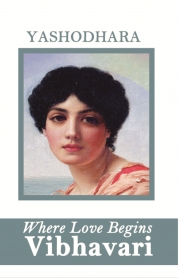
Book Review - Where Love Begins Vibhavari by Dr Joshodhara Purkayastha

Photo credit HERE
The beautiful, soft cover of the book was an instant draw for me, when it arrived at my door step. The mesmerizing face of the cover, and the light pastel colours were soothing to my mind. Naturally, I read the book at almost one sitting. The absorbing content can be clearly seen at three levels.

The first is direct. Vibhavari, a girl from a poor family in Rishikesh, is married off early at sixteen to a man from Dubai. The marriage turns abusive and the young Vibhavari is beaten and sexually abused by husband and brother-in-law. Innocent, shy and beautiful Vibhavati, bears this brunt, including bearing two sons from this marriage. At last, finding a way to escape from this torture, she is back to her own country, the two boys being placed in a boarding school in Panchgani, near Pune, Maharashtra.

After a marriage in which she literally undergoes marital rape, Vibhavari, is however, still looking for love, as she quite understands that there is a distinction between love and sex. She is looking for love, when, on her visit to see her sons, she meets a man, with whom she gets physically and emotionally close. However, when the question of marriage is brought before the man, he quickly retreats, saying the togetherness was more for mutual sexual pleasure and not for making commitment. Vibhavari is shocked and decides to stop meeting him.

Shortly after she meets a man from her own building residence, who is bethropped to  a lady, but does carry on an illicit sexual relationship with Vibhavari. This too meets the same fate – there will be no marriage in future. Vibhavari is depressed, lonely and still searching for that love, when, at the Yoga class she finally meets the man, older and wiser, with whom she is married again, and learns and travels a lot. Vibhavari, however, it seems is unlucky in love, as this last, treasure trove of love, is snatched away from her by death. Vibhavari is left alone, but this time, many things change in her life and lead her to an amazing end, coming the full circle, of life and love.

But, there is a deeper second level to this book and I would like to dwell on that. The perfect abuse story, of marital rape, physical abuse and mental torture would have lead to two consequences – one, Vibhavari would have shied away from society and become a recluse, but in fact, the opposite happens. She celebrates her body, her ability to find sexual gratification and to be engaged sexually with men she isa attracted to, showing the reader that there are two options available to the abused human; they can chose to become a recluse or they can embrace the world with more desire. Vibhavari chose the latter, but was still unfulfilled, because, she was really looking for love.

The third level of the book and story is complex and uplifting.  Desire, deviance and divinity make the third level the most exciting, for the reader with a ‘third eye’ that goes beyond the mundane. It is Freudian in nature – desire is inherent in man. Id,Ego, Superego. But where Freud stops, Indian spiritual therapy begins and so, Vibhabavi, the simple girl from Rishikesh, returns home, physhically, metaphorically and spiritually, back to where she came from and the reader now must travel with her, to Rishikesh to see what love finally is and where it finds its ultimate source and resting place.

Where Love Begins Vibhavari, is a powerful story at all levels, for love, is a primal search that is the be all and end all in our lives, until we know better.

Click HERE to buy the book.


Dr. Jashodhara Purkayastha (Yashodhara) is a professor from the education field with twenty-five years' experience in teaching psychology and philosophy, having done her master's in education from Mumbai University, India. She has completed post-graduate work in economics, this being one of the subjects taught. She has done her doctorate in education also and is giving her time to set up teacher training methods. She has written a poetry book consisting of 105 poems in three languages.You can reach her at: jashodharap(at)gmail.com


Monday, August 28, 2017

Book Review - The Adivasi Will Not Dance

Photo credit HERE
Hansda Sowvendra Shekhar ‘s book  The Adivasi Will Not Dance, is a collection of articles that make a compelling story of the lives of the Santhals in Jharkhand. It deals with exploitation of the tribe, without getting political and boring in its content.

The book reads like a continuous engagement with different families. Carefully woven into the fabric of these stories are the tales of exploitation by men in power, whether they belong to other so called upper caste, politicians, business tycoons, who will do anything to reap in profits, even if it means displacing the original inhabitants of that place, stealing from them their right to livelihood and not taking responsibility for the displacement or the loss of livelihood. In a way, it is a common story arising out of many parts of India, but with a difference - the story finally leaves the reader with a lot to think about – why must we invade the lives of people in the name of development? Whose development is it anyway? Do we really need to access people’s lives and livelihood, and rob them of all human dignity to satisfy our greed? Do we need to then, put labels on them, for acting in ways that we find objectionable?

When we take away from people or a tribe their right to self respect, we have no right then to pronounce judgment on what they wish to do to make ends meet and to survive.

"Come November, Santhal men, women and children walk down from their villages in the hills and the far-flung corners of the Santhal Pargana to the railway station in the district headquarters. These Santhals—villages, entire clans—make up long, snaking processions as they abandon their lands and farms to take the train to Namal, the Bardhaman district of West Bengal and the paddy fields there. In the month that these Santhal families will spend in Bardhaman, they will plant rice and other crops in farms owned by the zamindars of Bardhaman."

The picturesque description above is like a poem in prose, flowing through the pen of an author whose veins pulsate with Santhal blood, music, dance and condition. The highly academic, but shy of saying so, professional medical doctor and avid reader and writer, Hansda Sowvendra Shekhar, writes with passion on a subject close to his heart. He has seen the injustice and is disturbed by it. He must speak it out and write about it.

Sexually violated at most times, the Santhal women have learnt to fend for themselves too. They know what to get out of men in power. Recently, the Jharkhand Government burnt an effigy of the author and threatened to burn and ban the book, on grounds that it contained content that were unacceptable for Santhal women. They did not speak of their own hand in the conspiracy to keep the Santhal community forever hungry, exploited and sexually used. They did not speak of the way the public and private partnership has caused huge portions of Santhal land to be sold to corporate for coal mining.  But the para below, from the last lines of the book are self evident.

"‘Johar, Rashtrapati-babu. We are very proud and happy that you have come to our Santhal Pargana and we are also very proud that we have been asked to sing and dance before you and welcome you to our place. We will sing and dance before you but tell us, do we have a reason to sing and dance? Do we have a reason to be happy? You will now start building the power plant, but this plant will be the end of us all, the end of all the Adivasi. These men sitting beside you have told you that this power plant will change our fortunes, but these same men have forced us out of our homes and villages. We have nowhere to go, nowhere to grow our crops. How can this power plant be good for us? And how can we Adivasis dance and be happy? Unless we are given back our homes and land, we will not sing and dance. We Adivasis will not dance. The Adivasi will not—’"  

The last words could not be finished, because, when you stand against the men in power, your voice is shot down.

How long, will it take for man to realize, that finally you can’t eat money to ease your greed and the hungry Santhal community cannot live on your power over their bodies, their livelihood and their dignity?

The Adivasi Will Not Dance, is available in English, Hindi, Marathi, where it has been serialized and inTamil in print and eBook format.

Click HERE to Buy

You can read more of Hansda Sowvendra Shekhar’s writings HERE


Saturday, August 26, 2017

It's Raining Cash for Assam Floods

Photo credit HERE
On 12th August, 2017, the present Chief Minister of Assam, Sri Sarbananda Sonowal, had flown to Delhi to ask for fresh funds to save people, in a fresh burst of floods in Assam. Just prior to that, he had received close to Rs 1000 crores out of Rs 2350 crores allocated by Sri Narendra Modi for flood relief to Assam. (click to read here) The Prime Minister was unable to meet him but a high profile committee did. My question is, so, the question is, where has the 1000 Crore gone? Instead of being at the flood affected areas, why is the CM in Delhi instead?

In 1976, returning with my mother from Kolkata to Guwahati, the Kamrup Express was halted in New Bongaigaon, for change from broad to meter gauge, since there were no broad gauge to Guwahati directly. It was August. The rains had been beating down incessantly for weeks. The Borak river had swelled up to the size of a sea, with red water flowing tinted by the red soil. A large steamer, was ferrying the marooned people from one side of the back to the other side. There was no horizon at sight from whichever side of the bank you were.

My mother was as thin as a reed and weak from being a juvenile diabetic. I had to take her on slippery red mud to the ferry launch, holding her tightly so she did not fall over from being pushed by stranded, helpless masses of people eager to go on to the launch. At that time, the handle of the suitcase I was carrying, broke from being drenched by rain. We were all wet and dripping with rain water, but there was no stopping. We had to go on. The army had been deployed and they managed the crowd with their baton. There was no saying when one would land on anyone.

I pulled the suitcase under my arm and grabbed my mother closer. I yelled at people to keep calm and not push my mother. It was the worst hell I had gone through in my life - we were face to face with death, literally, until we reached the ferry launch. I pushed my mother against the railing and covered her with my body. The crowd beat on my back, but I did not let them hurt my mother. The launch started with not an inch of space between us. I was never, in my life, even love-locked to tightly.

The fear of water has not left my mind. Panic takes over, whenever I see water rising, although when we reached the other side, it was clear skies and we all took the waiting buses to Guwahati.

41 years have passed since then! The Brahmaputra and its tributaries continues to rise above danger level, every year the floods come, every year people drown and livestock and man are lost in floods. And every year the floods stop the railways from running smoothly.

41 years and the story is the same! Year upon year, the government allocates money for flood relief in crores! Joint Needs Assessment Report of Assam Floods, 2017 (Click HERE ) is many times better than the cursory on done in 2015 and 2016 too. Joint Needs Assessment Report of Assam Floods, 2015 (https://sphereindiablog.files.wordpress.com/2015/08/assam-floods-jna-report-august-2015_30-08-2015.pdf)  Click HERE for the Report on 2016. Action complete. Report presented.

What then is the action, beyond report writing? Oxfam International have come to help at ground zero, when ministers are flying hither thither for yet more funds to save people from the floods!

Click HERE to see Oxfam in Assam.

Please to note, gateway to Assam, GUWAHATI has been marked out to be one among "100 Smart Cities Mission" by our Prime Minister, Sri Narendra Modi's  to be completed by 2022.

Read the latest News HERE


Tuesday, June 27, 2017

Cafe Commoners by Ritwik Mukherjee

Photo Credit HERE
When you pick up Rikwik Mukherjee’s  book, published by Partridge India, called Café CommonersDairy of a father for his daughter, you are at once intrigued. The name suggests, the typical Bangla ‘adda’, which is the most favourite pastime for any Bengali, across nations, and naturally you are anxious to read the content, your curiosity at its height. For an adda or what might be best termed as Café Commoners, is the most intellectual hub, where talks of news, politics, business, world affairs, art, literature and even love are the most appetizing concoction of discussions that take place.   

However, Mukherjee’s book is more than that.

Inspired by Pandit Nehru’s book, Letters from a father to a daughter, written from Naini Jail in Allahabad, to Indira Gandhi, then only 10 years old, the collection in Mukherjee’s book, cover a wide range of things which are more to do with human character, daily affairs, things he has seen around him, told in an easy, humourous manner is short 300 – 400 word count little stories. In the foreword, he mentions -  

“My diary features some such hilarious and not-so-hilarious priceless incidents and characters, recollected in tranquility.”

There are approximately 81 really lovely, tiny tales which will leave the reader enchanted. These stories may be read by anyone who enjoys the little ‘adda’ away from the real one in the quietness of their home, or on a travel. And the big plus is some fabulous illustrations by Ajitesh Kar (Sentu)
What struck me most about both books, Ritwik Mukherjee’s and Pandit Nehru’s is the longing to connect with their daughters. While one was in jail when he wrote those letters, Ritwik Mukherjee is a very successful financial journalist with an illustrious career with some of the top line newspapers and online portals. Hence, it might be deduced that like Nehru, he might have very little time with his daughter, which prompted him to write this book, so that she could connect with her father through the written word, which really is his forte. And view the world though his lens as she grows up. Such a noble idea!

What touched me most about the book is the human element there – while the stories are anecdotes and insightful, the ‘being present’ with the loved one, in this case, the daughter, was indeed the emotional aspect that made the book so meaningful to me.

Just 163 pages in all, Café Commoners, is available in Amazon.com in Paperback and eBook format.  
(R) The author Ritwik Mukherjee (L) Ajitesh Kar (Sentu)

Conversation with Ritwik Mukherjee

  1. Was writing Café Commoners a break from the normal daily journalistic articles you write about on business and trade?

    Ritwik: Yes. It is, It is completely different.
  2. How long did you take to write this collection?

    Ritwik: I have been writing these on and off. Normally whenever I come across an interesting character,/interesting event/anecdote that has some lesson to offer....either I write them immediately or after some time, recollecting them in tranquility.
  3. Why did you choose to self-publish when you are already an accomplished journalist?

    Ritwik: The opportunity to get it published by Patridge India just came my way.

To BUY Café Commoners  Click HERE  For eBook HERE


Wednesday, June 07, 2017

Chetan Bhagat is like Maggie noodles!

Photo Credit HERE
"Chetan Bhagat is like Maggi noodles; you know you shouldn't be reading his books, but you can't help it." - Samvit Sengupta, aged 20 years.

That really sums up all and everything about what the young generation, who thrive on his books and are crazy about him, feel towards him.

A rave among the youth, roughly around 17 - 25 years and sometimes extending to even 35 years, Chetan Bhagat who started to publish in roughly 2011, has a lot to be proud about. Up until now, he has over 6 titles and sold over 8 million books in 2008 says Wikipedia. He has 3 films already to his credit, which are adaptations from his books. Here, I will talk about Half Girlfriend which has been made into a film also.

Published by Rupa Publications, Chetan Bhagat has made Rupa and himself flush with funds. Fans swoon over him and as soon as his books are out, they go out of order too.

So what is it that makes his books hot favourite among the TG he is addressing.

Vivek Kumar Anand, age 30 years, avid reader and young digital professional says,

"Though his books cannot be termed as great works of literature, but they entertaining for sure, because, firstly, his books are short and simple and secondly, he writes about things you can connect with.”

He is right. The language is simple, in his books and not once have you got to open your dictionary to find a meaning of any word. The pages flow, sometimes with two words conversations throughout, without any paragraph of description. Indeed, the language is so simple, even a ten year old can read and understand it.

Can Chetan Bhagat, who has beaten the track record of Indian authors writing in English, and is a rave among the youth, across the globe – can his work be considered as contributing to English literature? Or does he do some amount of research before he commences to write his next novel? I think not. But he has his fundas right. The IIM -A, Business Management graduate knows his P’s well.

His product, the books are simple, no jargon, indeed, addressing the heart of the people he writes for, youth. He writes from India, so he is in the right place at the right time, when the world is looking at Indian authors writing in English. His publishers keep his book price low and affordable, like spending Rs 100 - 200 at a Cafe in India, over sandwich, juice, cookies, and shakes.  And he wears his CB tag well on Twitter and Facebook with 6,623,692 people like his fan page and 9.32 million FOLLOWERS on Twitter. He does not have a profile in LinkedIn, because he is not that 'sort of guy'. Nothing  'official' about him at all. He markets himself well, daily tweets, FB posts and a well kept 'regular' kind of website, which does not scare the hell out of anyone who is visiting it - it's not that intellectual type in fact. Not at all like a thorough bred 'English type' with élan and polish.

No wonder, he speaks to the heart of India and the world, where LCD or (lowest common denominator) is indeed, what sells the most. Every marketer knows that like the back of their hand.

But, shock of all shocks, while well known authors in India, who have etched out their place under the sun, have not been selected for English Literature study under the prestigious Delhi University where as our man CB has made it to the list, among others like J K Rowling and others.

Professor Ratna Raman who teaches English Literature in Delhi University says –

“I usually tell my students that if they read Chetan Bhagat it should remain a closely guarded secret. Why is it on pure syllabus? Because Bhagat is loved by the right wing and university course revisions are done by people nominated to committees headed by people with a vision of Akahand Bharat. Usually it is the students not studying literature Honours but choosing English Credit who will mention Bhagat as part of their reading references. “

I have read two of his books but while I remember the last I just read, I forget the last one. Exactly, the quality of Chetan Bhagat's books - Read it - HooHaa about it - Then forget it!

Half Girlfriend published in 2014, is a story of love between two people, who have both come on a Sport's Quota to be admitted to the elitist St Stephen's College, New Delhi, India. While she is from a super rich business family in Delhi, he is from Dumraon, Bihar. While she, Riya has had a fairly good education and speaks English fluently, he is the "Myself Madhav Jha - types". While her affluent family spread across the world, is not without its bits of shame and guilt which drives Riya the central character of the story to attempt a few mistakes, Madhav Jha we are told comes from a princely background although, the old tradition is long lost, after India became independent. But both characters are basket ball players and it is the game that finally brings the two together, quite early in the book. The book then meanders from off the basket ball court into the love play ground and Madhav Jha is ready to "make Bihar proud" by initiating sex, Riya comes close but finally retreats from actually going all the way. This happens ever so often, that once when she sneaked inside his room in the boys hostel, and refuses to give in to the sexual advances from his end, he threatens, "Deti hai to, varna kat le!" meaning, fuq me or fuq off!  ich The gross right-in-the-face demand, actually makes her leave Madhav and marry the riiya is back ch family friend's son, living in London, Rohan. But the marriage breaks and Riya is back but this time, a new game of hide and seek begins, this time in Bihar, where Riya has taken a job with Nestle and Madhav, obsessed with her, finds her. And again a cat and a mouse game starts between them. Madhav wants a relationship, Riya does not; Riya wants a friendship, Madhav wants more. So, even as the reader arrives at pg 44, Chetan Bhagat has brought out the ambiguity of relationship/friendship, the desire/resistance, the dance of the traditional women v/s the modern girl, in Riya, very well. For Madhav Jha, Riya is his obsession, his passion, he can't let go of. At a certain level, he wants to be the English speaking Riya like, person himself, just like the millions of people living in India, who speak Hindi, but aspire to be as confident as English speaking people, which is a quircky aspiration in their minds.

In that sense, what Professor Ratna Raman says becomes all the more important - allowing Chetan Bhagat in the Credit Course at Delhi University, makes those people who want to tout as English literature Graduates, although not as Honours students, would make non-English speaking students especially from states which are Hindi speaking, feel more empowered over the language. In fact, the author Chetan Bhagat himself says, in pg 149, Half Girlfriend, "And last, reading simple English novels, like, the one by the wo learn Englishriter, what's his name, Chetan Bhagat."

Chetan Bhagat’s TOP TEN TOOLS to learn English (pg 148-9, Half Girlfriend)

  1. YouTube videos of famous speeches.
  2. Watching English movies with subtitles.
  3. English-only days – no Hindi conversation allowed.
  4. Working on speech content in Hindi first.
  5. Recording a English voice diary on phone through the day.
  6. Thinking in English.
  7. Watching television news debates in English.
  8. Calling call centres and choosing the English option.
  9. Reading out English advertisements on street hoardings
  10. Reading simple English novels.

Going back to the novel, Riya once again disappears from Madhav's life and in a series of unbelievable and highly fantacised development of the novel, is found very filmy like, by Madhav Jha at the last minute, in the last day of his 3-month Internship with The Gates Foundation in New York! The reader is much relieved when finally, at last, the two meet emotially and physically inside Riya's apartment in New York and Madhav is able to "make Bihar proud."

Samvit Sengupta explains, "It all began with the TV serials, F.R.E.I.N.D.S and How I Met Your Mother, when people in my generation were and are influenced and want to emulate the life of the people in the movie."

And that is what CB, has caught on to as well. Did I say, Chetan Bhagat does not dive too deep, into researching for his books? I was wrong!

Well done, @chetan_bhagat. You have one more Follower on Twitter and one more LIKE on your facebook.com/chetanbhagat.fanpage. I will be checking you out on www.chetanbhagat.com

Click HERE to Buy Half Girlfriend


And HERE is the Promo of the Film